In the rapidly evolving world of decentralized finance (DeFi), ensuring compliance with Anti-Money Laundering (AML) regulations is paramount. One of the most critical components in this ecosystem is the AML check DEX aggregator transaction flow, which plays a vital role in maintaining transparency and security across decentralized exchanges (DEXs). This guide explores the intricacies of the AML check DEX aggregator transaction flow, its importance, and how it integrates with modern financial compliance frameworks.
As DeFi continues to grow, the need for robust AML checks becomes more pressing. DEX aggregators, which combine liquidity from multiple sources to provide users with the best trading rates, must incorporate AML checks to prevent illicit activities such as money laundering, fraud, and terrorist financing. This article delves into the AML check DEX aggregator transaction flow, explaining its components, processes, and the technologies that make it possible.
What Is a DEX Aggregator and Why AML Checks Are Essential
A DEX aggregator is a platform that sources liquidity from various decentralized exchanges to offer users the best possible trading prices. Unlike centralized exchanges, DEXs operate without intermediaries, relying on smart contracts to facilitate trades. However, this decentralized nature also presents challenges in terms of regulatory compliance, particularly in AML.
The Role of DEX Aggregators in DeFi
DEX aggregators like 1inch, Matcha, and ParaSwap have become indispensable in the DeFi space. They aggregate liquidity from multiple DEXs, allowing users to execute trades with minimal slippage and optimal pricing. By sourcing liquidity from various pools, these aggregators enhance efficiency and reduce costs for traders.
However, the decentralized and pseudonymous nature of DeFi transactions makes it difficult to track the origin and destination of funds. This is where AML check DEX aggregator transaction flow comes into play. By integrating AML checks into the transaction flow, aggregators can identify suspicious activities and comply with regulatory requirements.
Why AML Checks Are Critical in DEX Aggregators
Money laundering in DeFi is a growing concern. Criminals can exploit the anonymity of blockchain transactions to move illicit funds across different wallets and exchanges. AML checks help mitigate these risks by:
- Identifying suspicious transactions: By analyzing transaction patterns, AML tools can flag transactions that exhibit unusual behavior, such as rapid movements of large sums or transactions involving high-risk addresses.
- Ensuring regulatory compliance: Many jurisdictions require financial institutions, including DeFi platforms, to implement AML measures. Failure to comply can result in hefty fines and legal repercussions.
- Protecting users and the ecosystem: AML checks help maintain the integrity of the DeFi ecosystem by preventing bad actors from exploiting vulnerabilities in decentralized exchanges.
The AML check DEX aggregator transaction flow ensures that every transaction processed through an aggregator undergoes rigorous scrutiny, thereby enhancing the overall security and legitimacy of DeFi operations.
The Components of an AML Check DEX Aggregator Transaction Flow
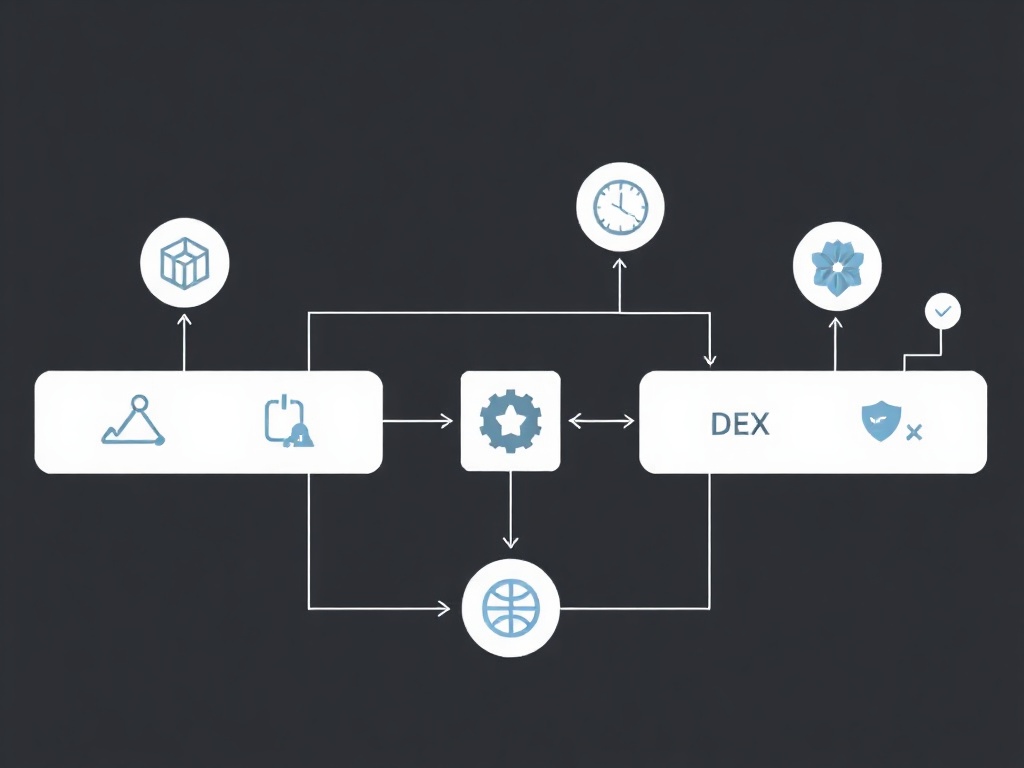
The AML check DEX aggregator transaction flow is a multi-layered process that involves several key components. Understanding these components is essential for grasping how AML checks are integrated into the transaction lifecycle.
1. Transaction Initiation and Data Collection
When a user initiates a trade on a DEX aggregator, the process begins with data collection. The aggregator gathers essential information about the transaction, including:
- The sender’s wallet address
- The recipient’s wallet address
- The amount and type of cryptocurrency being transferred
- The timestamp of the transaction
- Additional metadata, such as transaction hashes and smart contract interactions
This data is crucial for conducting AML checks, as it provides the foundation for identifying suspicious activities.
2. Risk Assessment and Screening
Once the transaction data is collected, the next step in the AML check DEX aggregator transaction flow is risk assessment. This involves screening the transaction against various databases and risk indicators to determine its legitimacy.
Screening Against Sanctions Lists
One of the primary components of AML checks is screening transactions against sanctions lists. These lists, maintained by regulatory bodies such as the Office of Foreign Assets Control (OFAC) in the U.S. and the European Union’s sanctions regimes, identify individuals, entities, and countries that are prohibited from engaging in financial transactions.
DEX aggregators integrate these sanctions lists into their AML systems to ensure that no transactions are processed with sanctioned entities. If a transaction involves a sanctioned address, the aggregator can block it or flag it for further review.
Transaction Pattern Analysis
Another critical aspect of risk assessment is transaction pattern analysis. AML tools use machine learning and statistical models to identify unusual transaction patterns that may indicate money laundering or other illicit activities. Common red flags include:
- Rapid movement of funds: Transactions that involve the quick transfer of large sums of cryptocurrency across multiple wallets.
- Mixing services: Transactions that use mixing or tumbling services to obscure the origin of funds.
- Structuring: Breaking down large transactions into smaller amounts to avoid detection.
- High-risk jurisdictions: Transactions involving addresses or entities located in jurisdictions known for weak AML regulations.
By analyzing these patterns, the AML check DEX aggregator transaction flow can identify and flag suspicious transactions for further investigation.
3. Identity Verification and KYC Integration
While DEXs are designed to be decentralized and permissionless, many DEX aggregators are now integrating Know Your Customer (KYC) procedures to enhance compliance. This is particularly important for aggregators that facilitate fiat-to-crypto transactions or interact with regulated entities.
The Role of KYC in AML Compliance
KYC procedures require users to verify their identity by providing government-issued IDs, proof of address, and other relevant documents. This information is then cross-referenced with AML databases to ensure that the user is not involved in illicit activities.
For DEX aggregators, KYC integration can be challenging due to the decentralized nature of the platform. However, many aggregators are adopting hybrid models that combine decentralized trading with centralized compliance features. For example, users may be required to complete KYC verification before accessing certain features or liquidity pools.
Decentralized Identity Solutions
To address the challenges of identity verification in a decentralized environment, some projects are exploring decentralized identity (DID) solutions. These solutions leverage blockchain technology to create self-sovereign identities that users can control without relying on centralized authorities.
By integrating DID solutions into the AML check DEX aggregator transaction flow, aggregators can enhance compliance while preserving user privacy and decentralization.
4. Real-Time Monitoring and Alerts
Once a transaction passes the initial risk assessment, it enters the real-time monitoring phase of the AML check DEX aggregator transaction flow. During this phase, the transaction is continuously monitored for any changes in risk status or suspicious behavior.
Automated Alert Systems
AML tools use automated alert systems to notify compliance teams of potential risks. These alerts are triggered by predefined rules or machine learning algorithms that detect anomalies in transaction behavior. For example, if a transaction suddenly increases in value or involves a high-risk address, an alert is generated for review.
Manual Review and Escalation
In cases where automated systems flag a transaction as high-risk, a manual review process is initiated. Compliance teams analyze the transaction in detail, considering factors such as the user’s transaction history, the nature of the transaction, and any associated risks.
If the transaction is deemed suspicious, it may be escalated to regulatory authorities or law enforcement for further investigation. The aggregator may also freeze the funds or block the transaction to prevent illicit activities.
5. Reporting and Record-Keeping
The final component of the AML check DEX aggregator transaction flow is reporting and record-keeping. Regulatory frameworks such as the Bank Secrecy Act (BSA) in the U.S. and the Fifth Anti-Money Laundering Directive (5AMLD) in the EU require financial institutions to maintain detailed records of transactions and report suspicious activities to authorities.
Suspicious Activity Reports (SARs)
If a transaction is flagged as suspicious, the aggregator is required to file a Suspicious Activity Report (SAR) with the relevant regulatory body. SARs provide authorities with detailed information about the transaction, including the parties involved, the amount, and the reasons for suspicion.
Transaction Logs and Audit Trails
In addition to reporting suspicious activities, DEX aggregators must maintain comprehensive transaction logs and audit trails. These records are essential for demonstrating compliance with AML regulations and can be used in investigations or audits.
The AML check DEX aggregator transaction flow ensures that all transactions are documented and traceable, thereby enhancing transparency and accountability in the DeFi ecosystem.
Technologies Powering the AML Check DEX Aggregator Transaction Flow
The effectiveness of the AML check DEX aggregator transaction flow relies on advanced technologies that enable real-time monitoring, risk assessment, and compliance. This section explores the key technologies that power AML checks in DEX aggregators.
Blockchain Analytics Tools
Blockchain analytics tools are the backbone of AML checks in DeFi. These tools analyze on-chain data to trace the flow of funds, identify suspicious patterns, and link transactions to real-world entities. Some of the leading blockchain analytics platforms include:
- Chainalysis: A widely used platform that provides AML and compliance solutions for cryptocurrency businesses. Chainalysis offers tools for transaction monitoring, risk assessment, and sanctions screening.
- Elliptic: Another prominent player in the blockchain analytics space, Elliptic specializes in detecting illicit activities such as money laundering, terrorist financing, and darknet market transactions.
- TRM Labs: TRM Labs offers a suite of compliance tools that leverage machine learning to identify and mitigate risks in cryptocurrency transactions.
These tools integrate seamlessly with DEX aggregators, enabling them to conduct real-time AML checks on every transaction.
Smart Contract Audits and Security
Since DEX aggregators rely on smart contracts to execute trades, ensuring the security and integrity of these contracts is crucial. Smart contract audits help identify vulnerabilities that could be exploited by bad actors to launder money or manipulate transactions.
The Role of Smart Contract Audits in AML Compliance
Smart contract audits involve a thorough review of the code to identify potential security flaws, such as reentrancy attacks, front-running vulnerabilities, or logic errors. By addressing these issues, aggregators can prevent malicious actors from exploiting the system for illicit purposes.
Additionally, audited smart contracts enhance the transparency of the AML check DEX aggregator transaction flow, as users and regulators can verify that the code operates as intended.
Machine Learning and AI in AML Checks
Machine learning (ML) and artificial intelligence (AI) are revolutionizing the way AML checks are conducted in DeFi. These technologies enable aggregators to analyze vast amounts of transaction data in real time, identifying patterns and anomalies that may indicate suspicious activities.
How AI Enhances AML Compliance
AI-powered AML tools can:
- Detect unusual transaction patterns: By analyzing historical data, AI models can identify transactions that deviate from normal behavior, such as rapid movements of funds or transactions involving high-risk addresses.
- Predict future risks: Machine learning algorithms can predict potential risks based on transaction patterns, enabling aggregators to take proactive measures to mitigate them.
- Automate compliance processes: AI can automate routine compliance tasks, such as sanctions screening and transaction monitoring, reducing the burden on compliance teams.
The integration of AI into the AML check DEX aggregator transaction flow enhances the accuracy and efficiency of AML checks, making it easier for aggregators to comply with regulatory requirements.
Decentralized Identity and Zero-Knowledge Proofs
As mentioned earlier, decentralized identity (DID) solutions are gaining traction in the DeFi space. These solutions leverage blockchain technology to create self-sovereign identities that users can control without relying on centralized authorities.
The Role of Zero-Knowledge Proofs in AML Compliance
Zero-knowledge proofs (ZKPs) are cryptographic techniques that allow users to prove the validity of a transaction without revealing sensitive information. For example, a user can prove that they are not on a sanctions list without disclosing their identity or transaction details.
By integrating ZKPs into the AML check DEX aggregator transaction flow, aggregators can enhance privacy while maintaining compliance with AML regulations. This approach is particularly useful in decentralized environments where users value privacy and autonomy.
Challenges and Future Trends in AML Check DEX Aggregator Transaction Flow
While the AML check DEX aggregator transaction flow has made significant strides in enhancing compliance and security in DeFi, several challenges remain. This section explores the key challenges faced by DEX aggregators and the future trends that are shaping the evolution of AML checks in the space.
Key Challenges in Implementing AML Checks
Implementing effective AML checks in DEX aggregators is not without its challenges. Some of the most pressing issues include:
1. Balancing Privacy and Compliance
One of the biggest challenges in DeFi is balancing the need for privacy with the requirements of AML compliance. Users value the anonymity provided by decentralized platforms, but regulators demand transparency to prevent illicit activities.
Finding a middle ground between these two priorities is a complex task. While some aggregators are integrating KYC procedures, others are exploring decentralized identity solutions that preserve user privacy while enabling compliance.
2. Scalability and Real-Time Processing
The sheer volume of transactions in DeFi poses a significant challenge for AML checks. Aggregators must process thousands of transactions per second while conducting real-time risk assessments. This requires robust infrastructure and advanced technologies such as AI and machine learning.
Scalability is another concern, as the growth of DeFi continues to outpace the development of compliance tools. Aggregators must invest in scalable solutions that can handle increasing transaction volumes without compromising on security or compliance.
3. Regulatory Uncertainty
The regulatory landscape for DeFi is still evolving, with different jurisdictions adopting varying approaches to AML compliance. This uncertainty makes it difficult for aggregators to implement consistent compliance frameworks.
For example, while some countries have clear guidelines for cryptocurrency compliance, others are still in the process of developing regulations. Aggregators operating in multiple jurisdictions must navigate this patchwork of rules to ensure compliance.
4. Integration with Traditional Financial Systems
Many DEX aggregators facilitate cross-border transactions that involve both cryptocurrency and fiat currencies. Integrating AML checks with traditional financial systems, such as banks and payment processors, can be challenging due to differences in regulatory frameworks and compliance standards.
Aggregators must ensure that their AML checks are compatible with the requirements of traditional financial institutions to facilitate seamless transactions across different systems.
Future Trends in AML Check DEX Aggregator Transaction Flow
Despite these challenges, the future of the AML check DEX aggregator transaction flow looks promising. Several trends are emerging that have the potential to revolutionize AML compliance in DeFi:
1. The Rise of Regulatory-Compliant DEXs
As regulators tighten their grip on the cryptocurrency industry, we are seeing the emergence of regulatory-compliant DEXs that integrate AML checks from the ground up. These platforms are designed to meet the requirements of financial authorities while preserving the decentralized nature of DeFi.
For example, some DEXs are adopting hybrid models that combine decentralized trading with centralized compliance features, such as KYC verification and transaction monitoring. This approach allows users to enjoy the benefits of DeFi while ensuring compliance with AML regulations.
2. Advancements in Blockchain Analytics
Blockchain analytics tools are becoming increasingly sophisticated, enabling aggregators to conduct more accurate and efficient AML checks. Advancements in AI and machine learning are enhancing the ability of these tools to detect suspicious activities in real time.
For instance, new blockchain analytics platforms are leveraging graph theory to trace the flow of funds across multiple transactions, making it easier to identify money laundering schemes. These advancements will play a crucial role in shaping the future of the AML check DEX aggregator transaction flow.
3. The Adoption of Decentralized Compliance Protocols
Decentralized compliance protocols are emerging as a promising solution to the challenges of AML checks in DeFi. These protocols leverage blockchain technology to create transparent and auditable compliance frameworks that do not rely on centralized authorities.
For example, decentralized compliance protocols can enable users to prove their compliance with AML regulations without revealing sensitive information. This approach enhances privacy while ensuring that aggregators can meet their regulatory obligations.
4. Increased Collaboration Between DeFi and Traditional Finance
As DeFi continues to grow, we are seeing increased collaboration between decentralized

Optimizing AML Compliance in DEX Aggregator Transaction Flows: A Strategic Perspective
As a Digital Assets Strategist with a quantitative background in traditional finance and cryptocurrency markets, I’ve observed that the rise of decentralized exchange (DEX) aggregators has introduced both efficiency and complexity in transaction flows—particularly when it comes to anti-money laundering (AML) compliance. The AML check DEX aggregator transaction flow is not merely a regulatory checkbox; it’s a critical layer in maintaining market integrity and user trust. Aggregators like 1inch, Matcha, or ParaSwap optimize trade execution by splitting orders across multiple liquidity sources, but this fragmentation also creates blind spots in transaction monitoring. Traditional AML tools, designed for centralized exchanges, often struggle to reconstruct the full transaction path in a decentralized setting. This necessitates a shift toward on-chain forensic analysis and real-time risk scoring, where each swap leg is evaluated not just for its immediate counterparties but for its broader network exposure.
From a practical standpoint, implementing an effective AML framework for DEX aggregators requires a multi-pronged approach. First, aggregators must integrate transaction monitoring systems that can trace funds across EVM-compatible chains and Layer 2 solutions, leveraging graph analytics to map the flow of assets from source to destination. Second, partnerships with specialized blockchain intelligence firms—such as Chainalysis or TRM Labs—can provide the necessary off-chain data to contextualize on-chain activity, identifying high-risk addresses or sanctioned entities that may be concealed within the aggregator’s routing logic. Finally, aggregators should adopt a risk-based approach, applying stricter scrutiny to transactions involving privacy coins, mixers, or high-volatility assets, where the likelihood of illicit activity is disproportionately higher. The goal isn’t to stifle innovation but to ensure that the efficiency gains of DEX aggregators don’t come at the expense of regulatory compliance or market safety.