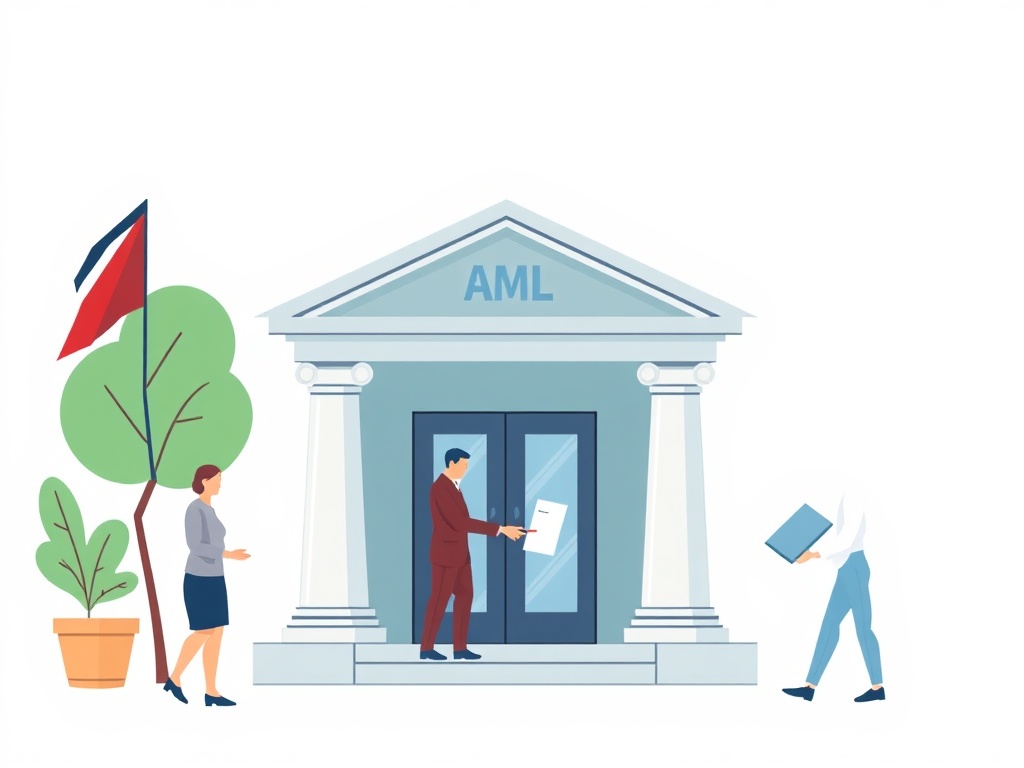
The global financial system relies heavily on robust anti-money laundering (AML) measures to prevent illicit activities such as money laundering, terrorist financing, and fraud. One critical component of this system is the AML check correspondent network, a framework that facilitates cross-border financial transactions while ensuring compliance with international AML regulations. This article explores the intricacies of the AML check correspondent network, its importance, operational mechanisms, challenges, and best practices for financial institutions.
The Role of the AML Check Correspondent Network in Financial Compliance
The AML check correspondent network serves as a vital link between financial institutions, enabling them to conduct international transactions securely and in compliance with AML laws. This network consists of correspondent banks and financial intermediaries that facilitate the movement of funds across borders while verifying the legitimacy of transactions.
Key Functions of the AML Check Correspondent Network
- Transaction Verification: Ensures that funds transferred between institutions are legitimate and free from illicit origins.
- Regulatory Compliance: Helps institutions adhere to AML regulations such as the Bank Secrecy Act (BSA), FATF Recommendations, and the EU’s AMLD6.
- Risk Mitigation: Reduces the exposure of financial institutions to money laundering and financial crime risks.
- Cross-Border Facilitation: Enables seamless international transactions while maintaining security and transparency.
Without an effective AML check correspondent network, financial institutions would struggle to verify the legitimacy of cross-border transactions, leaving them vulnerable to regulatory penalties and reputational damage.
How the AML Check Correspondent Network Operates
The AML check correspondent network operates through a series of interconnected relationships between correspondent banks and respondent banks. Here’s a step-by-step breakdown of its workflow:
- Initiation of Transaction: A respondent bank receives a request to transfer funds internationally.
- Correspondent Bank Selection: The respondent bank selects a correspondent bank with which it has an established relationship.
- Transaction Processing: The correspondent bank processes the transaction while conducting AML checks.
- Verification and Approval: The correspondent bank verifies the transaction details and ensures compliance with AML regulations.
- Fund Transfer: If the transaction passes AML checks, the funds are transferred to the recipient bank.
- Record Keeping: Both banks maintain records of the transaction for regulatory audits.
This structured approach ensures that every transaction is scrutinized for potential AML risks, reducing the likelihood of financial crime.
The Importance of the AML Check Correspondent Network for Financial Institutions
Financial institutions must prioritize the AML check correspondent network to maintain regulatory compliance and protect their operations from financial crime. Below are the key reasons why this network is indispensable:
Regulatory Compliance and Legal Obligations
Financial institutions are legally required to implement robust AML measures under various international and national regulations. The AML check correspondent network helps institutions meet these obligations by:
- Ensuring compliance with the Financial Action Task Force (FATF) Recommendations.
- Adhering to regional AML directives such as the EU’s Sixth Anti-Money Laundering Directive (AMLD6).
- Preventing penalties and fines associated with non-compliance.
Enhancing Financial Security and Trust
A well-functioning AML check correspondent network enhances the security of financial transactions by:
- Detecting Suspicious Activities: Identifying and flagging transactions that may involve money laundering or terrorist financing.
- Strengthening Due Diligence: Ensuring that correspondent banks conduct thorough customer due diligence (CDD) and enhanced due diligence (EDD) where necessary.
- Building Stakeholder Confidence: Demonstrating a commitment to ethical financial practices, which fosters trust among clients, regulators, and investors.
Mitigating Financial Crime Risks
Money laundering and financial crime pose significant risks to financial institutions, including:
- Reputational Damage: Associations with financial crime can tarnish an institution’s reputation.
- Financial Losses: Institutions may face hefty fines or legal consequences for failing to prevent money laundering.
- Operational Disruptions: Regulatory investigations can disrupt normal business operations.
By leveraging the AML check correspondent network, financial institutions can proactively mitigate these risks and safeguard their operations.
Challenges in Implementing an Effective AML Check Correspondent Network
While the AML check correspondent network is essential, financial institutions face several challenges in implementing and maintaining an effective system. Understanding these challenges is crucial for developing robust AML strategies.
Complex Regulatory Landscape
The global nature of the AML check correspondent network means that financial institutions must navigate a complex web of regulations, including:
- FATF Recommendations: International standards that guide AML compliance.
- Regional Directives: Such as the EU’s AMLD6 or the U.S. Bank Secrecy Act (BSA).
- Local Laws: Each country may have additional AML requirements that institutions must comply with.
Keeping up with these ever-changing regulations can be daunting, particularly for institutions operating in multiple jurisdictions.
Technological and Operational Hurdles
Implementing an effective AML check correspondent network requires advanced technology and operational capabilities, including:
- Data Integration: Seamlessly integrating AML systems with existing transaction monitoring tools.
- Real-Time Monitoring: The ability to monitor transactions in real-time to detect suspicious activities promptly.
- Scalability: Ensuring that the system can handle increasing transaction volumes without compromising accuracy.
Many institutions struggle with outdated systems or lack the technological infrastructure to support a robust AML check correspondent network.
Human Resource and Training Challenges
A well-functioning AML check correspondent network relies on skilled professionals who understand AML regulations and best practices. However, financial institutions often face:
- Skill Gaps: A shortage of AML specialists who can interpret complex regulations and implement effective controls.
- Training Costs: The need for continuous training to keep staff updated on evolving AML trends and technologies.
- High Turnover: The risk of losing experienced AML professionals to competitors or other industries.
Addressing these challenges requires a strategic approach to talent management and professional development.
Cross-Border Collaboration and Information Sharing
The effectiveness of the AML check correspondent network depends on collaboration between financial institutions, regulators, and law enforcement agencies. However, challenges in this area include:
- Data Privacy Concerns: Institutions may be hesitant to share sensitive information due to privacy laws such as GDPR.
- Jurisdictional Differences: Varying AML standards across countries can complicate cross-border cooperation.
- Lack of Standardization: Inconsistent AML practices among correspondent banks can create gaps in compliance.
Overcoming these challenges requires fostering a culture of transparency and collaboration within the financial ecosystem.
Best Practices for Building a Robust AML Check Correspondent Network
To maximize the effectiveness of the AML check correspondent network, financial institutions should adopt the following best practices:
Implement Advanced AML Technologies
Technology plays a pivotal role in enhancing the capabilities of the AML check correspondent network. Institutions should consider adopting:
- AI and Machine Learning: These technologies can analyze vast amounts of transaction data to detect patterns indicative of money laundering.
- Blockchain for Transparency: Blockchain technology can provide immutable records of transactions, making it easier to trace funds and verify their legitimacy.
- Automated Compliance Tools: Tools that automate AML checks can reduce human error and improve efficiency.
Conduct Thorough Due Diligence on Correspondent Banks
Before entering into a correspondent banking relationship, financial institutions must conduct comprehensive due diligence to assess the AML compliance of potential partners. This includes:
- Reviewing Regulatory History: Checking if the correspondent bank has faced any AML-related fines or penalties.
- Assessing AML Policies: Evaluating the bank’s AML policies, procedures, and training programs.
- Monitoring Transaction Patterns: Analyzing the bank’s transaction history for any red flags.
Foster a Culture of Compliance and Awareness
A strong AML check correspondent network requires a top-down commitment to compliance. Financial institutions should:
- Provide Regular Training: Ensure that all employees, from frontline staff to senior management, are well-versed in AML regulations and best practices.
- Encourage Whistleblowing: Create channels for employees to report suspicious activities without fear of retaliation.
- Promote Ethical Leadership: Leaders should set an example by prioritizing compliance and ethical behavior.
Collaborate with Regulators and Industry Peers
Financial institutions can strengthen their AML check correspondent network by collaborating with regulators and industry peers. This includes:
- Participating in Industry Forums: Engaging with organizations such as the FATF, Wolfsberg Group, or local AML associations to stay updated on best practices.
- Sharing Intelligence: Participating in information-sharing initiatives such as the Egmont Group to exchange insights on emerging AML threats.
- Engaging with Regulators: Maintaining open communication with regulators to understand their expectations and address any compliance concerns.
Continuously Monitor and Update AML Policies
The financial crime landscape is constantly evolving, and so should an institution’s AML policies. Financial institutions should:
- Conduct Regular Audits: Review and update AML policies and procedures to ensure they remain effective.
- Stay Informed on Emerging Threats: Monitor trends in financial crime, such as cryptocurrency-related money laundering or trade-based laundering.
- Adopt a Risk-Based Approach: Tailor AML measures to the specific risks faced by the institution, rather than adopting a one-size-fits-all approach.
The Future of the AML Check Correspondent Network
The AML check correspondent network is evolving rapidly in response to technological advancements, regulatory changes, and emerging financial crime trends. Understanding these future developments is crucial for financial institutions aiming to stay ahead of the curve.
Integration of Artificial Intelligence and Big Data
Artificial intelligence (AI) and big data analytics are poised to revolutionize the AML check correspondent network by:
- Enhancing Detection Capabilities: AI can analyze vast datasets to identify suspicious transactions in real-time.
- Reducing False Positives: Machine learning algorithms can distinguish between legitimate transactions and potential AML risks more accurately.
- Improving Predictive Analytics: AI can predict emerging AML trends and help institutions proactively adjust their compliance strategies.
Expansion of Digital Identity Verification
Digital identity verification is becoming increasingly important in the AML check correspondent network, particularly with the rise of digital banking and fintech. Key developments include:
- Biometric Authentication: Using facial recognition, fingerprint scanning, or other biometric methods to verify customer identities.
- Blockchain-Based Identity Solutions: Leveraging blockchain to create secure, tamper-proof digital identities.
- Regulatory Sandboxes: Governments and regulators are exploring sandbox environments to test innovative identity verification technologies.
Increased Focus on Cryptocurrency and Virtual Assets
The growing use of cryptocurrencies and virtual assets presents new challenges for the AML check correspondent network. Financial institutions must adapt by:
- Implementing Crypto-Specific AML Measures: Developing tools to monitor and analyze cryptocurrency transactions for suspicious activities.
- Collaborating with Crypto Exchanges: Partnering with regulated cryptocurrency exchanges to ensure compliance with AML regulations.
- Adopting Travel Rule Compliance: Implementing the FATF’s Travel Rule, which requires the sharing of transaction information between financial institutions.
Global Harmonization of AML Regulations
Efforts are underway to harmonize AML regulations across jurisdictions, which would simplify compliance for financial institutions operating internationally. Key initiatives include:
- FATF’s Mutual Evaluations: Regular assessments of countries’ AML frameworks to identify gaps and promote standardization.
- Regional AML Directives: Such as the EU’s AMLD6, which aims to create a unified AML framework across member states.
- International Cooperation: Enhanced collaboration between regulators, law enforcement, and financial institutions to combat cross-border financial crime.
Sustainability and Ethical Considerations
The future of the AML check correspondent network will also be shaped by sustainability and ethical considerations, including:
- Environmental, Social, and Governance (ESG) Factors: Incorporating ESG criteria into AML compliance strategies to align with global sustainability goals.
- Ethical AI: Ensuring that AI-driven AML tools are used responsibly and do not perpetuate biases or discrimination.
- Corporate Social Responsibility (CSR): Financial institutions are increasingly expected to demonstrate their commitment to ethical practices and social responsibility.
Case Studies: Successful AML Check Correspondent Networks in Action
Examining real-world examples of successful AML check correspondent networks can provide valuable insights for financial institutions looking to enhance their own systems. Below are two case studies that highlight best practices and innovative approaches.
Case Study 1: JPMorgan Chase’s Global AML Compliance Framework
JPMorgan Chase, one of the world’s largest financial institutions, has implemented a robust AML check correspondent network to ensure compliance with global AML regulations. Key features of their framework include:
- Advanced Transaction Monitoring: JPMorgan uses AI-powered tools to monitor transactions in real-time, identifying suspicious activities with high accuracy.
- Global Correspondent Banking Relationships: The bank maintains a network of trusted correspondent banks, each subjected to rigorous due diligence.
- Collaboration with Regulators: JPMorgan actively engages with regulators worldwide to stay ahead of emerging AML trends and regulatory changes.
- Employee Training and Awareness: The bank invests heavily in AML training programs, ensuring that all employees understand their role in preventing financial crime.
As a result of these efforts, JPMorgan has maintained a strong compliance record and avoided significant regulatory penalties.
Case Study 2: HSBC’s Enhanced Due Diligence Program
HSBC, a global banking giant, has revamped its AML check correspondent network to address past compliance failures and enhance its AML framework. Key initiatives include:
- Risk-Based Approach: HSBC has adopted a risk-based approach to AML, tailoring its compliance measures to the specific risks faced by different regions and customer segments.
- Automated Compliance Tools: The bank has implemented automated AML tools to streamline transaction monitoring and reduce human error.
- Partnership with Fintech Firms: HSBC collaborates with fintech companies to leverage innovative technologies such as blockchain for enhanced transparency.
- Public Commitment to Compliance: HSBC has publicly committed to strengthening its AML framework, demonstrating its dedication to ethical practices.
These efforts have significantly improved HSBC’s compliance posture and reduced its exposure to financial crime risks.
Common Misconceptions About the AML Check Correspondent Network
Despite its importance, the AML check
As a crypto investment advisor with over a decade of experience, I’ve seen firsthand how the absence of robust compliance frameworks can expose investors to unnecessary risks. An AML check correspondent network isn’t just a regulatory checkbox—it’s a foundational layer of security that bridges the gap between traditional finance and the decentralized world of cryptocurrency. For institutional and retail investors alike, this network acts as a critical intermediary, ensuring that transactions are vetted against global anti-money laundering (AML) standards before they even enter the blockchain. Without it, the anonymity that makes crypto attractive also becomes a liability, leaving portfolios vulnerable to illicit activity and regulatory scrutiny. From a practical standpoint, integrating an AML check correspondent network into your investment strategy isn’t optional—it’s a competitive advantage. These networks, often composed of licensed financial institutions and specialized compliance providers, offer real-time screening of counterparties, reducing the risk of exposure to sanctioned entities or high-risk jurisdictions. For example, when evaluating a new DeFi protocol or exchange, I prioritize platforms that leverage such networks to verify user identities and transaction histories. This not only mitigates legal risks but also enhances liquidity by attracting institutional players who demand stringent due diligence. In an environment where regulatory crackdowns are becoming the norm, an AML correspondent network isn’t just about compliance—it’s about safeguarding your capital and maintaining access to the most lucrative opportunities in crypto.
The Critical Role of an AML Check Correspondent Network in Secure Crypto Investments