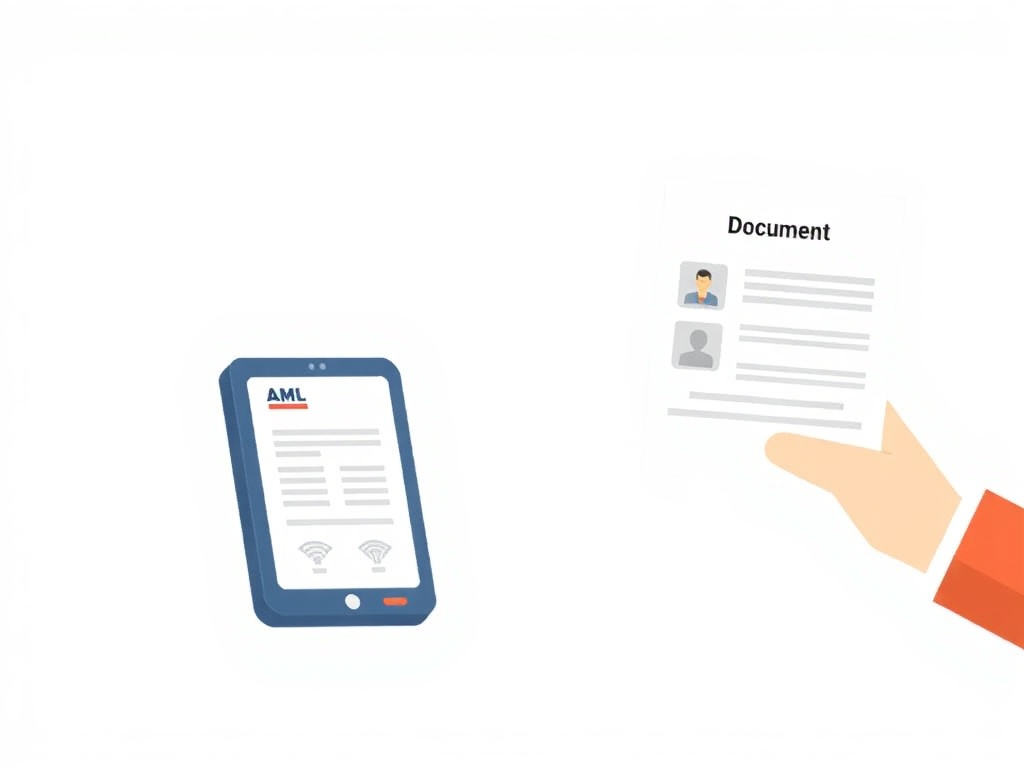
In today's rapidly evolving financial landscape, the integration of advanced technologies such as Radio Frequency Identification (RFID) with Anti-Money Laundering (AML) compliance measures has become a cornerstone of secure and efficient document verification. The AML RFID document check represents a sophisticated approach to identity verification, fraud prevention, and regulatory adherence, particularly in sectors such as banking, insurance, and government services. This article explores the intricacies of AML RFID document checks, their operational mechanisms, benefits, challenges, and best practices for implementation.
As financial crimes grow in complexity, traditional document verification methods often fall short in providing real-time, tamper-proof authentication. The AML RFID document check leverages RFID technology embedded in identity documents—such as passports, national ID cards, and driver’s licenses—to enable instantaneous, contactless verification while ensuring compliance with stringent AML regulations. This guide provides a detailed examination of how this technology works, its role in modern compliance frameworks, and why organizations must adopt it to stay ahead of regulatory and security challenges.
---What Is an AML RFID Document Check?
The Intersection of AML and RFID Technology
An AML RFID document check combines two critical components: Anti-Money Laundering (AML) protocols and Radio Frequency Identification (RFID) technology. AML refers to a set of laws, regulations, and procedures designed to prevent criminals from disguising illegally obtained funds as legitimate income. RFID, on the other hand, is a wireless communication technology that uses electromagnetic fields to automatically identify and track tags attached to objects or individuals.
When applied to identity documents, RFID enables the embedded chip within the document to transmit stored data—such as the holder’s name, date of birth, biometric information, and document number—when scanned by a compatible reader. This data is then cross-referenced against AML databases, watchlists, and government records to verify identity and detect potential fraud or money laundering risks. The result is a seamless, secure, and automated verification process that enhances compliance and reduces human error.
How RFID-Enabled Documents Work
RFID-enabled identity documents typically contain a small microchip and an antenna embedded within the card or passport. These components store and transmit data via radio waves when activated by an RFID reader. The most common standards for RFID in identity documents include:
- ISO/IEC 14443: Used in proximity cards (e.g., contactless payment cards and e-passports), operating at 13.56 MHz with a read range of up to 10 cm.
- ISO/IEC 18000-6: A UHF standard used in logistics and some government IDs, offering longer read ranges but lower security.
- EPC Gen2: Commonly used in supply chain tracking but increasingly adopted in secure document applications.
During an AML RFID document check, the reader sends a signal to the RFID chip, which responds by transmitting encrypted data. This data is then decrypted and validated against AML databases maintained by financial institutions, law enforcement agencies, and international organizations such as the Financial Action Task Force (FATF). The entire process takes seconds, making it ideal for high-volume verification scenarios like onboarding, border control, or loan processing.
Regulatory Framework Governing AML RFID Checks
The implementation of AML RFID document checks is not merely a technological choice—it is a regulatory imperative in many jurisdictions. Key regulations include:
- FATF Recommendations: The Financial Action Task Force mandates that financial institutions verify customer identity using reliable, independent sources, including electronic identity verification (eIDV) systems that may incorporate RFID.
- eIDAS Regulation (EU): The Electronic Identification, Authentication and Trust Services Regulation provides a legal framework for electronic identification and trust services, including RFID-based identity verification.
- Bank Secrecy Act (BSA) and USA PATRIOT Act (US): These laws require financial institutions to implement customer due diligence (CDD) and enhanced due diligence (EDD) measures, which can be facilitated through automated AML RFID document checks.
- General Data Protection Regulation (GDPR): While promoting data privacy, GDPR also encourages the use of secure, encrypted data transmission methods like RFID to protect personal information during verification.
Organizations that fail to implement robust AML RFID verification systems risk regulatory penalties, reputational damage, and exposure to financial crime. As such, integrating RFID technology into AML compliance workflows is not optional—it is a strategic necessity.
---Why AML RFID Document Checks Are Essential in Modern Compliance
Enhancing Security and Reducing Fraud
One of the most compelling reasons to adopt an AML RFID document check is its ability to significantly reduce identity fraud. Traditional paper-based documents are vulnerable to forgery, alteration, and counterfeiting. In contrast, RFID-enabled documents use cryptographic protection and tamper-evident features to prevent unauthorized access and duplication.
For example, e-passports issued under the ICAO 9303 standard include an RFID chip that stores biometric data (e.g., facial recognition or fingerprint templates) and is digitally signed by the issuing authority. During an AML RFID document check, the system can verify the digital signature, ensuring the document has not been tampered with. This level of security is nearly impossible to achieve with physical inspection alone.
Moreover, RFID technology supports multi-factor authentication. In addition to reading the embedded chip, systems can cross-verify the document holder’s biometric data (e.g., via facial recognition or fingerprint scan) against the data stored in the RFID chip. This layered approach minimizes the risk of impersonation and synthetic identity fraud.
Streamlining Customer Onboarding and Due Diligence
Customer onboarding is a critical phase in AML compliance, often involving extensive manual document verification. This process is not only time-consuming but also prone to errors and inconsistencies. An AML RFID document check automates much of this workflow, reducing processing time from minutes to seconds.
Financial institutions can integrate RFID readers into their digital onboarding platforms, enabling customers to upload or present their RFID-enabled ID during a video call or in-person visit. The system automatically extracts and validates the data, checks it against AML watchlists (e.g., OFAC, EU Sanctions Lists), and flags any discrepancies for further review. This automation not only improves efficiency but also enhances the customer experience by reducing wait times and paperwork.
Additionally, automated AML RFID document checks support continuous monitoring—a key requirement under modern AML regulations. Instead of conducting periodic reviews, institutions can perform real-time checks whenever a customer interacts with the system, ensuring ongoing compliance without manual intervention.
Supporting Global Compliance and Cross-Border Verification
In an increasingly interconnected world, financial institutions must verify identities across international borders. An AML RFID document check simplifies this process by enabling standardized, interoperable verification across jurisdictions that issue RFID-enabled identity documents.
For instance, the European Union’s eIDAS framework allows mutual recognition of electronic identities across member states. A bank in Germany can verify a customer’s identity using an RFID-enabled ID card issued in France, provided both systems comply with eIDAS standards. This interoperability reduces the complexity of cross-border AML compliance and supports the global fight against financial crime.
Furthermore, international organizations like the FATF encourage the adoption of digital identity solutions, including RFID-based verification, to enhance transparency and reduce the anonymity that facilitates money laundering. By implementing an AML RFID document check, organizations align with global best practices and demonstrate a commitment to ethical and secure operations.
Cost Savings and Operational Efficiency
While the initial investment in RFID infrastructure and compliance software may seem significant, the long-term cost savings are substantial. Manual document verification requires significant labor, physical storage, and risk of human error. In contrast, an automated AML RFID document check reduces operational costs by:
- Minimizing manual review: Automated data extraction and validation reduce the need for staff to manually input or verify information.
- Lowering storage costs: Digital records eliminate the need for physical document storage and retrieval.
- Reducing false positives: Advanced algorithms and biometric matching improve accuracy, reducing the number of legitimate customers flagged for additional scrutiny.
- Scaling efficiently: RFID systems can handle high volumes of verifications without additional staffing, making them ideal for large financial institutions or government agencies.
Over time, the ROI of implementing an AML RFID document check becomes evident not only in cost savings but also in improved compliance posture and customer trust.
---How to Implement an AML RFID Document Check System
Step 1: Assess Regulatory Requirements and Document Types
Before implementing an AML RFID document check, organizations must identify which types of RFID-enabled documents they need to verify. Common document types include:
- e-Passports (ICAO 9303 compliant)
- National ID cards (e.g., European eID, US REAL ID)
- Driver’s licenses with RFID chips
- Residence permits and work visas
- Corporate identity cards for business clients
Each document type may use different RFID standards and data formats. For example, e-passports typically use ISO/IEC 14443 and store data in a structured format defined by ICAO, while some national ID cards may use proprietary formats. Organizations must ensure their RFID readers and software support the relevant standards.
Additionally, organizations should review local AML regulations to determine the required level of due diligence. For high-risk customers (e.g., politically exposed persons or those from high-risk jurisdictions), enhanced verification—such as additional biometric checks or manual review—may be necessary.
Step 2: Select RFID Readers and Compliance Software
The core of an AML RFID document check system is the RFID reader and the compliance software that processes the data. Key considerations when selecting these components include:
- Reader compatibility: Ensure the reader supports the RFID standards used in the target documents (e.g., ISO/IEC 14443 for e-passports).
- Data extraction capabilities: The software should be able to parse and interpret the data stored in the RFID chip, including biometric templates and digital signatures.
- Integration with AML databases: The system must connect to watchlists (e.g., OFAC, EU Sanctions List) and government databases (e.g., Interpol, national ID registries) for real-time screening.
- Biometric matching: For enhanced security, the system should support facial recognition or fingerprint matching to verify the document holder’s identity.
- Audit trails and reporting: Comprehensive logging is essential for regulatory compliance and internal audits.
Popular RFID readers for identity verification include models from HID Global, NXP Semiconductors, and Thales. Compliance software solutions such as Onfido, Jumio, and Trulioo offer integrated RFID verification capabilities alongside AML screening tools.
Step 3: Integrate with Existing Systems
To maximize efficiency, the AML RFID document check system should integrate seamlessly with existing customer onboarding platforms, CRM systems, and compliance workflows. This integration can be achieved through:
- APIs: Most modern compliance software offers RESTful APIs for easy integration with third-party systems.
- SDKs: Software development kits allow organizations to build custom verification workflows tailored to their needs.
- Middleware solutions: Some vendors provide middleware that acts as a bridge between RFID readers, compliance software, and internal databases.
For example, a bank might integrate an AML RFID document check into its mobile banking app. When a customer uploads a photo of their RFID-enabled ID, the app uses the device’s NFC (Near Field Communication) capabilities to read the chip and validate the data against AML databases in real time. This end-to-end automation reduces friction in the onboarding process while ensuring compliance.
Step 4: Train Staff and Establish Protocols
Even with advanced technology, human oversight remains critical. Staff responsible for operating the AML RFID document check system must be trained to:
- Recognize common RFID document types and their security features.
- Interpret verification results and handle exceptions (e.g., documents that fail biometric matching).
- Respond to alerts for potential fraud or AML violations.
- Ensure data privacy and GDPR compliance when handling sensitive information.
Additionally, organizations should establish clear protocols for escalation. For instance, if an AML RFID document check flags a document as suspicious, the system should automatically route the case to a compliance officer for further investigation. This ensures that potential risks are addressed promptly and in accordance with regulatory guidelines.
Step 5: Monitor, Update, and Optimize
Technology and regulations are constantly evolving. To maintain the effectiveness of an AML RFID document check system, organizations must:
- Monitor performance: Track metrics such as verification success rates, false positives, and processing times to identify areas for improvement.
- Update software and databases: Ensure the system uses the latest AML watchlists, document standards, and security patches.
- Conduct regular audits: Review the system’s compliance with internal policies and external regulations to identify gaps or vulnerabilities.
- Gather feedback: Collect input from staff and customers to refine the verification process and enhance user experience.
By adopting a continuous improvement mindset, organizations can ensure their AML RFID document check system remains effective, secure, and compliant in the long term.
---Challenges and Considerations in AML RFID Document Checks
Privacy and Data Protection Concerns
While RFID technology offers significant benefits, it also raises concerns about data privacy. RFID chips in identity documents store sensitive personal information, and unauthorized access to this data could lead to identity theft or surveillance. To mitigate these risks, organizations must:
- Use encrypted communication: Ensure data transmitted between the RFID chip and reader is encrypted using protocols such as AES or RSA.
- Implement access controls: Restrict who can read and process RFID data within the organization.
- Comply with GDPR and other privacy laws: Provide clear information to individuals about how their data will be used and obtain explicit consent where required.
- Use secure storage: Store RFID data in encrypted databases with strict access controls.
Additionally, organizations should educate customers about the security features of RFID-enabled documents and how their data is protected during an AML RFID document check.
Interoperability and Standardization Issues
The lack of global standardization in RFID document formats can pose challenges for organizations operating across multiple jurisdictions. For example, an AML RFID document check system designed for European eID cards may not support the RFID format used in US driver’s licenses or Asian national ID cards.
To address this, organizations should:
- Adopt widely recognized standards: Prioritize systems that support ISO/IEC 14443 and ICAO 9303 for e-passports.
- Use middleware solutions: These can translate between different RFID formats and data structures.
- Collaborate with industry groups: Participate in organizations like the FIDO Alliance or GlobalPlatform to advocate for standardization.
Interoperability is particularly critical for financial institutions with international clients, as they must verify a diverse range of RFID-enabled documents.
Technical Limitations and False Positives
Despite advancements in RFID technology, technical limitations can still arise. For example:
- Reader compatibility: Not all RFID readers support every document type, leading to failed verifications.
- Signal interference: Metal objects or electromagnetic interference can disrupt RFID communication.
- Data corruption: In rare cases, the RFID chip may become damaged or unreadable, requiring manual intervention.
To minimize these issues, organizations should:
- Use high-quality RFID readers: Invest in enterprise-grade devices with robust error handling.
- Implement fallback procedures: If an AML RFID document check fails, the system should automatically switch to alternative verification methods (e.g., OCR-based document scanning).
- Monitor system performance: Regularly test the system with a variety of RFID-enabled documents to identify and resolve compatibility issues.
False positives—where legitimate documents are flagged as suspicious—

Enhancing Identity Verification: The Role of AML RFID Document Checks in Modern Compliance
As Blockchain Research Director with a background in fintech and distributed ledger technology, I’ve observed firsthand how identity verification has evolved from manual processes to sophisticated digital solutions. The integration of AML RFID document check systems represents a critical advancement in this space, particularly for financial institutions, border control agencies, and regulated industries. By embedding RFID chips in identity documents—such as passports or national ID cards—these systems enable real-time authentication while embedding anti-money laundering (AML) compliance directly into the verification workflow. This not only reduces fraud but also streamlines due diligence, a challenge that traditional paper-based checks often struggle to address efficiently.
From a practical standpoint, the adoption of AML RFID document check technologies aligns with the growing demand for seamless yet secure identity verification. For instance, in cross-border transactions or high-value account openings, RFID-enabled documents can be scanned in seconds, cross-referencing biometric data and government databases to flag suspicious activity without human error. However, the effectiveness of these systems hinges on robust backend infrastructure—smart contracts or permissioned blockchains can further enhance transparency by logging verification events immutably. My research suggests that institutions leveraging this hybrid approach not only mitigate AML risks but also future-proof their compliance frameworks against emerging threats like deepfake identity fraud.