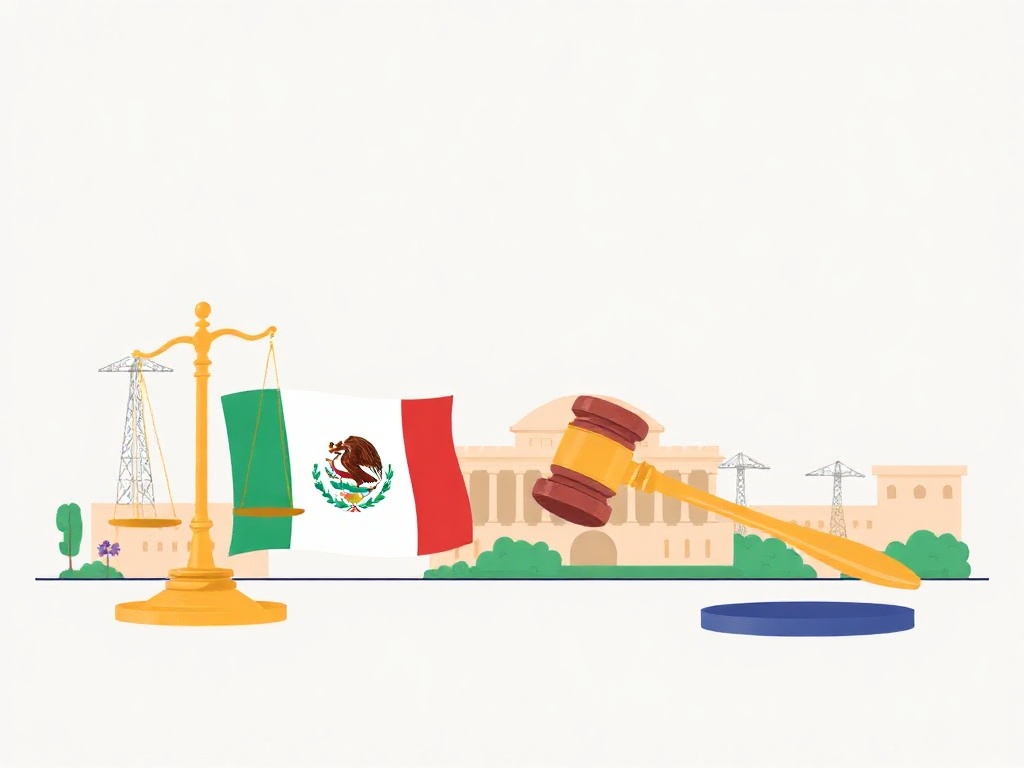
In recent years, Mexico has emerged as a key player in the global fintech landscape, driven by rapid digital transformation and a growing demand for financial inclusion. As the fintech sector expands, so does the importance of robust Anti-Money Laundering (AML) checks and compliance with regulatory frameworks. The Comisión Nacional Bancaria y de Valores (CNBV), Mexico’s primary financial regulator, plays a pivotal role in enforcing AML regulations under the country’s fintech law.
This comprehensive guide explores the intersection of AML checks, the CNBV’s regulatory oversight, and Mexico’s fintech law. We’ll delve into the legal requirements, compliance obligations for fintech companies, and the broader implications for businesses operating in Mexico’s financial ecosystem. Whether you're a fintech startup, an established financial institution, or a compliance professional, understanding these regulations is essential for maintaining legal and operational integrity.
The Regulatory Framework: AML Check in Mexico and the CNBV’s Role
What is the CNBV and Why Does It Matter for AML Compliance?
The Comisión Nacional Bancaria y de Valores (CNBV) is Mexico’s independent financial regulatory authority, responsible for overseeing banks, insurance companies, securities firms, and—critically—fintech institutions. Established under the Banking and Credit Institutions Law, the CNBV enforces compliance with Mexico’s AML laws, including the Federal Law for the Prevention and Identification of Operations with Illicit Proceeds (LFPIORPI), commonly known as the AML Law.
The CNBV’s role in AML checks is multifaceted. It:
- Supervises financial institutions: The CNBV monitors banks, fintechs, and other regulated entities to ensure they adhere to AML protocols.
- Issues guidelines: The regulator provides detailed instructions on AML compliance, including customer due diligence (CDD) and suspicious transaction reporting (STR).
- Conducts inspections: The CNBV performs audits to verify that institutions are implementing AML measures effectively.
- Imposes sanctions: Non-compliance can result in fines, license revocation, or criminal referrals.
For fintech companies operating in Mexico, the CNBV’s oversight means that AML checks are not optional—they are a legal necessity. Failure to comply with CNBV regulations can lead to severe penalties, reputational damage, and even the loss of operating licenses.
Key AML Laws in Mexico: LFPIORPI and Beyond
Mexico’s primary AML legislation is the LFPIORPI, which mandates that financial institutions implement measures to prevent money laundering and terrorist financing. The law applies to a wide range of entities, including:
- Banks and credit institutions
- Insurance companies
- Securities firms
- Fintech companies (e.g., crowdfunding platforms, digital payment providers, and cryptocurrency exchanges)
- Casinos and real estate agencies
Under the LFPIORPI, financial institutions must:
- Identify and verify customers: This includes collecting and validating identification documents, such as passports or national IDs.
- Monitor transactions: Institutions must track unusual or high-risk transactions and report suspicious activities to the Financial Intelligence Unit (UIF).
- Implement risk-based approaches: The level of scrutiny should correspond to the risk profile of the customer or transaction.
- Maintain records: Institutions must keep transaction records for at least five years.
In addition to the LFPIORPI, Mexico’s fintech law—the Fintech Law (Ley Fintech)—introduces specific AML obligations for fintech companies. Enacted in 2018, the Fintech Law regulates crowdfunding, electronic payments, and virtual asset service providers (VASPs), requiring them to comply with CNBV’s AML guidelines.
AML Check Requirements for Fintech Companies in Mexico
Who is Subject to AML Checks Under Mexico’s Fintech Law?
The Fintech Law applies to three main types of fintech institutions:
- Crowdfunding institutions: Platforms that facilitate loans or investments from the public.
- Electronic payment institutions: Companies that provide digital payment services, such as e-wallets or prepaid cards.
- Virtual asset service providers (VASPs): Entities dealing with cryptocurrencies or other digital assets.
Each of these institutions must register with the CNBV and obtain an operating license. As part of the licensing process, fintechs must demonstrate robust AML compliance frameworks. Even after obtaining a license, ongoing AML checks are mandatory to maintain compliance.
Customer Due Diligence (CDD): The Cornerstone of AML Checks
Customer Due Diligence (CDD) is the process of verifying the identity of customers and assessing their risk levels. For fintech companies in Mexico, CDD is a critical component of AML checks and must be conducted in accordance with CNBV guidelines. The process typically involves:
1. Identity Verification
Fintechs must collect and verify the following information from customers:
- Full legal name
- Tax ID number (RFC or CURP)
- Proof of address (e.g., utility bill or bank statement)
- Government-issued ID (e.g., passport, INE card, or driver’s license)
For corporate customers, additional documentation may be required, such as articles of incorporation, shareholder registers, and beneficial ownership information.
2. Risk Assessment
The CNBV requires fintechs to classify customers based on their risk level. Factors that influence risk classification include:
- Geographic location: Customers from high-risk jurisdictions (e.g., countries with weak AML controls) may require enhanced due diligence.
- Transaction patterns: Unusual or high-value transactions may trigger additional scrutiny.
- Business activities: Certain industries, such as gambling or cryptocurrency, are considered higher risk.
Based on the risk assessment, fintechs must apply the appropriate level of due diligence:
- Simplified due diligence (SDD): For low-risk customers, minimal verification is required.
- Standard due diligence (SD): For medium-risk customers, basic verification and ongoing monitoring are necessary.
- Enhanced due diligence (EDD): For high-risk customers, additional checks, such as source of funds verification, are mandatory.
3. Ongoing Monitoring
AML checks are not a one-time process. Fintechs must continuously monitor customer transactions to detect and report suspicious activities. This includes:
- Transaction monitoring: Tracking unusual patterns, such as frequent large transactions or transactions with high-risk entities.
- Periodic reviews: Reassessing customer risk profiles at regular intervals.
- Updating records: Keeping customer information up to date, especially if their risk profile changes.
Suspicious Transaction Reporting (STR) Obligations
Under the LFPIORPI, fintechs must report any transactions that they suspect may be linked to money laundering or terrorist financing to the Financial Intelligence Unit (UIF). The UIF is Mexico’s financial intelligence agency, responsible for analyzing and disseminating suspicious activity reports (SARs).
Key considerations for STR reporting include:
- Thresholds: While there is no minimum threshold for reporting, transactions that lack a clear economic purpose or involve high-risk jurisdictions should be flagged.
- Timing: Reports must be submitted within 30 days of detecting suspicious activity.
- Confidentiality: Fintechs must maintain the confidentiality of STR filings to protect customer privacy and avoid tipping off potential criminals.
Failure to report suspicious transactions can result in severe penalties, including fines and criminal liability for responsible individuals.
Implementing an Effective AML Compliance Program for Fintechs
Step 1: Develop a Risk-Based AML Policy
A robust AML compliance program starts with a well-documented policy that aligns with CNBV and LFPIORPI requirements. The policy should outline:
- Scope of coverage: Which entities, products, and services are subject to AML checks.
- Risk assessment methodology: How the fintech will identify and classify risks.
- Customer onboarding procedures: Steps for verifying customer identities and assessing risk.
- Transaction monitoring rules: Criteria for flagging suspicious activities.
- Reporting procedures: How and when to file STR reports with the UIF.
The policy should be approved by senior management and reviewed annually to ensure it remains effective and up to date.
Step 2: Invest in Technology and Automation
Manual AML checks are time-consuming, error-prone, and often insufficient for fintechs handling large volumes of transactions. To streamline compliance, fintechs should invest in AML software solutions that offer:
- Automated identity verification: Tools that use AI and machine learning to verify customer identities in real time.
- Transaction monitoring: Systems that flag unusual patterns based on predefined rules or machine learning algorithms.
- Watchlist screening: Integration with global sanctions and PEP (Politically Exposed Persons) lists to identify high-risk individuals.
- Audit trails: Comprehensive logs of all AML-related activities for regulatory inspections.
Popular AML software solutions used by fintechs in Mexico include ComplyAdvantage, Refinitiv World-Check, and LexisNexis Risk Solutions.
Step 3: Train Employees on AML Compliance
Even the most advanced technology cannot replace the need for well-trained employees. Fintechs must ensure that their staff—particularly those in customer-facing roles, compliance, and risk management—are knowledgeable about AML regulations and the fintech’s internal policies.
Key training topics include:
- AML laws and regulations: Understanding the LFPIORPI, CNBV guidelines, and Fintech Law requirements.
- Customer due diligence: How to verify identities and assess risk levels.
- Suspicious activity detection: Recognizing red flags, such as structuring or layering transactions.
- Reporting procedures: When and how to file STR reports with the UIF.
- Data privacy: Protecting customer information and maintaining confidentiality.
Training should be conducted regularly—at least annually—and documented to demonstrate compliance to regulators.
Step 4: Conduct Independent AML Audits
To ensure that AML checks are effective, fintechs should undergo independent AML audits conducted by third-party experts. These audits evaluate the fintech’s compliance program against regulatory requirements and industry best practices.
An effective AML audit typically includes:
- Policy and procedure review: Assessing whether the fintech’s AML policies align with CNBV guidelines.
- Sample testing: Reviewing a sample of customer files and transactions to verify compliance.
- Risk assessment validation: Confirming that the fintech’s risk classification methodology is accurate.
- Reporting accuracy: Ensuring that STR reports are filed correctly and on time.
Audits should be conducted at least annually, or more frequently if the fintech operates in high-risk sectors or jurisdictions.
Challenges and Best Practices for AML Compliance in Mexico’s Fintech Sector
Common Challenges Faced by Fintechs
While AML compliance is essential, fintechs in Mexico often encounter several challenges in implementing effective AML checks:
1. Balancing Compliance with Customer Experience
Stringent AML checks can create friction in the customer onboarding process, leading to longer wait times and higher dropout rates. Fintechs must strike a balance between compliance and a seamless user experience.
Best Practice: Use eKYC (electronic Know Your Customer) solutions that automate identity verification while maintaining security. For example, facial recognition and biometric authentication can speed up the onboarding process without compromising compliance.
2. Keeping Up with Evolving Regulations
Mexico’s AML laws and CNBV guidelines are subject to frequent updates, particularly as fintech innovation accelerates. Fintechs must stay informed about regulatory changes to avoid non-compliance.
Best Practice: Subscribe to regulatory updates from the CNBV, UIF, and Bank of Mexico. Engage with industry associations, such as the Mexican Fintech Association (AMF), to stay ahead of trends.
3. Managing Cross-Border Transactions
Many fintechs operate internationally, processing transactions across multiple jurisdictions. This introduces additional AML risks, as different countries have varying compliance standards.
Best Practice: Implement a global AML framework that aligns with the highest standards, such as the FATF Recommendations. Use AML software with multi-jurisdictional capabilities to screen transactions against international watchlists.
4. Handling Cryptocurrency and Virtual Assets
Virtual asset service providers (VASPs) face unique AML challenges, as cryptocurrencies can be used to obscure illicit transactions. The CNBV has issued specific guidelines for VASPs, requiring them to implement enhanced due diligence measures.
Best Practice: Adopt blockchain analytics tools to trace cryptocurrency transactions and identify suspicious patterns. Work with regulators to ensure compliance with Mexico’s AML laws for digital assets.
Best Practices for Effective AML Compliance
To overcome these challenges, fintechs should adopt the following best practices:
1. Adopt a Culture of Compliance
AML compliance should be ingrained in the fintech’s culture, with leadership setting the tone from the top. This includes:
- Appointing a dedicated AML Compliance Officer to oversee the program.
- Incorporating AML training into onboarding for all employees.
- Encouraging employees to report potential compliance issues without fear of retaliation.
2. Leverage Regulatory Technology (RegTech)
RegTech solutions can automate many aspects of AML compliance, reducing manual errors and improving efficiency. Key RegTech tools include:
- Identity verification platforms: Tools like Onfido or Jumio use AI to verify identities in real time.
- Transaction monitoring systems: Solutions like Feedzai or NICE Actimize detect suspicious activities using machine learning.
- Sanctions screening software: Platforms like Dow Jones Risk & Compliance help fintechs screen customers against global sanctions lists.
3. Collaborate with Industry Peers
Fintechs can benefit from sharing knowledge and best practices with other industry players. Consider joining industry groups such as:
- Mexican Fintech Association (AMF)
- Global Digital Finance (GDF)
- FATF’s Private Sector Consultative Forum
Collaboration can also extend to partnerships with traditional financial institutions, which often have mature AML compliance programs.
4. Prepare for Regulatory Inspections
The CNBV conducts regular inspections to assess fintechs’ AML compliance. To prepare, fintechs should:
- Maintain comprehensive records: Ensure all AML-related documents, including customer files and transaction logs, are up to date.
- Conduct mock audits: Simulate CNBV inspections to identify and address potential gaps.
- Engage legal counsel: Work with AML attorneys to review compliance programs and address any regulatory concerns.
The Future of AML Check in Mexico
 Sarah Mitchell
Blockchain Research Director
Sarah Mitchell
Blockchain Research Director
Strengthening AML Compliance in Mexico’s Fintech Sector: A Deep Dive into the CNBV’s Regulatory Framework
As the Blockchain Research Director at a leading fintech innovation hub, I’ve closely monitored Mexico’s evolving regulatory landscape, particularly the CNBV’s fintech law and its implications for AML (Anti-Money Laundering) compliance. The AML check Mexico CNBV fintech law represents a critical step toward harmonizing financial innovation with robust risk mitigation. The Comisión Nacional Bancaria y de Valores (CNBV) has demonstrated a forward-thinking approach by integrating AML requirements directly into its fintech licensing framework, ensuring that digital asset service providers (VASPs), crowdfunding platforms, and e-money institutions operate within a structured compliance ecosystem. This alignment with international standards—such as FATF’s Travel Rule—is not just regulatory overhead; it’s a strategic enabler for Mexico’s fintech sector to attract institutional investment while maintaining financial integrity.
From a practical standpoint, the CNBV’s AML provisions demand more than superficial due diligence. Fintech firms must implement real-time transaction monitoring, KYC (Know Your Customer) automation, and blockchain analytics to flag suspicious activities—especially in cross-border transactions involving cryptocurrencies. The law’s emphasis on traceability aligns well with blockchain’s inherent transparency, but success hinges on integrating traditional AML tools with decentralized identity solutions. For instance, smart contract-based compliance modules can enforce regulatory checks at the protocol level, reducing human error and ensuring consistent enforcement. However, the challenge lies in balancing innovation with compliance: fintechs must avoid over-engineering solutions that stifle user experience while meeting the CNBV’s stringent reporting deadlines. The key takeaway? The AML check Mexico CNBV fintech law isn’t just a box to tick—it’s an opportunity to build trust in Mexico’s digital economy, provided firms invest in scalable, auditable compliance infrastructure.
Strengthening AML Compliance in Mexico’s Fintech Sector: A Deep Dive into the CNBV’s Regulatory Framework
As the Blockchain Research Director at a leading fintech innovation hub, I’ve closely monitored Mexico’s evolving regulatory landscape, particularly the CNBV’s fintech law and its implications for AML (Anti-Money Laundering) compliance. The AML check Mexico CNBV fintech law represents a critical step toward harmonizing financial innovation with robust risk mitigation. The Comisión Nacional Bancaria y de Valores (CNBV) has demonstrated a forward-thinking approach by integrating AML requirements directly into its fintech licensing framework, ensuring that digital asset service providers (VASPs), crowdfunding platforms, and e-money institutions operate within a structured compliance ecosystem. This alignment with international standards—such as FATF’s Travel Rule—is not just regulatory overhead; it’s a strategic enabler for Mexico’s fintech sector to attract institutional investment while maintaining financial integrity.
From a practical standpoint, the CNBV’s AML provisions demand more than superficial due diligence. Fintech firms must implement real-time transaction monitoring, KYC (Know Your Customer) automation, and blockchain analytics to flag suspicious activities—especially in cross-border transactions involving cryptocurrencies. The law’s emphasis on traceability aligns well with blockchain’s inherent transparency, but success hinges on integrating traditional AML tools with decentralized identity solutions. For instance, smart contract-based compliance modules can enforce regulatory checks at the protocol level, reducing human error and ensuring consistent enforcement. However, the challenge lies in balancing innovation with compliance: fintechs must avoid over-engineering solutions that stifle user experience while meeting the CNBV’s stringent reporting deadlines. The key takeaway? The AML check Mexico CNBV fintech law isn’t just a box to tick—it’s an opportunity to build trust in Mexico’s digital economy, provided firms invest in scalable, auditable compliance infrastructure.