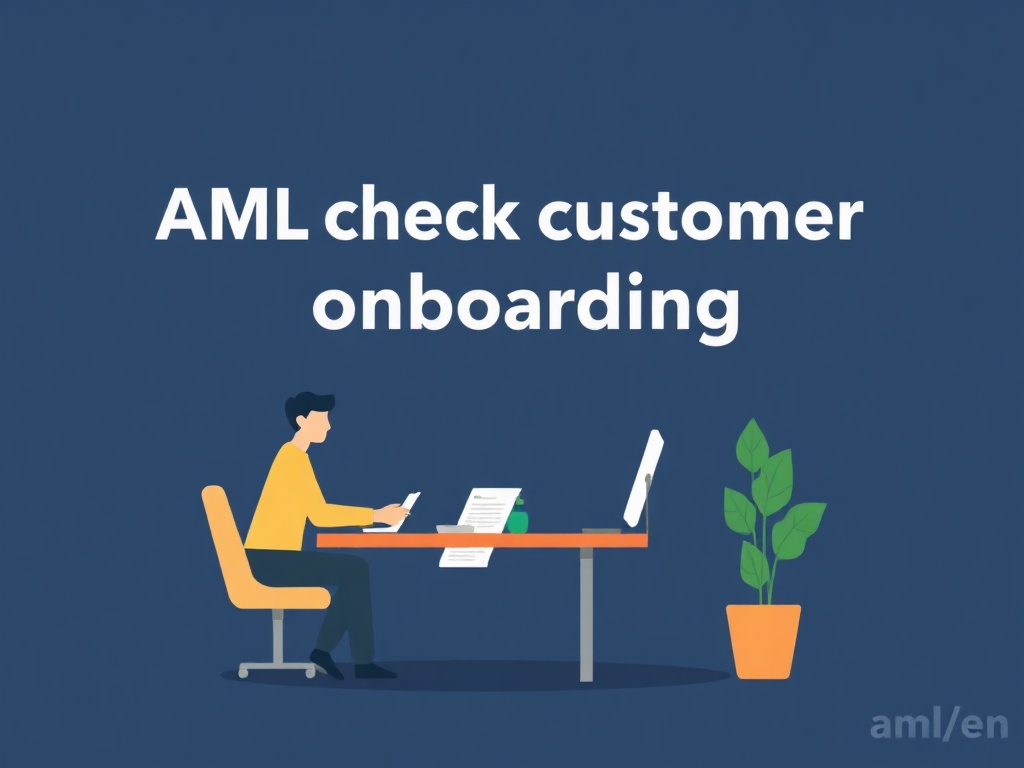
In today's rapidly evolving financial landscape, AML check customer onboarding has become a cornerstone of risk management and regulatory compliance. Financial institutions, fintechs, and regulated entities face increasing pressure to implement robust anti-money laundering (AML) measures during the customer onboarding process. This comprehensive guide explores the critical aspects of AML checks in customer onboarding, their importance, implementation strategies, and best practices to ensure both compliance and customer satisfaction.
The integration of effective AML check customer onboarding processes is not merely a regulatory requirement but a fundamental component of a secure financial ecosystem. As criminals develop more sophisticated methods to launder money, financial institutions must stay one step ahead by implementing thorough verification procedures. This article delves into the intricacies of AML screening during customer onboarding, providing actionable insights for organizations seeking to enhance their compliance frameworks.
The Importance of AML Check in Customer Onboarding
Regulatory Compliance and Legal Requirements
Financial institutions operate under a complex web of international and local regulations designed to combat money laundering and terrorist financing. The AML check customer onboarding process serves as the first line of defense against financial crime. Key regulatory frameworks include:
- Bank Secrecy Act (BSA) (USA): Requires financial institutions to maintain records and file reports on certain transactions.
- Patriot Act (USA): Mandates customer identification programs (CIP) as part of the onboarding process.
- Fifth Anti-Money Laundering Directive (5AMLD) (EU): Enhances transparency in financial transactions and strengthens AML checks.
- Financial Action Task Force (FATF) Recommendations: Global standards for combating money laundering and terrorist financing.
Failure to implement adequate AML check customer onboarding procedures can result in severe penalties, including hefty fines, reputational damage, and even criminal liability. Regulatory bodies such as FinCEN, OFAC, and the European Banking Authority actively monitor compliance with AML regulations.
Risk Mitigation and Fraud Prevention
Beyond regulatory compliance, a robust AML check customer onboarding process significantly reduces the risk of financial fraud. Money laundering schemes often involve the infiltration of legitimate financial systems, making early detection during onboarding crucial. By implementing comprehensive AML checks, institutions can:
- Identify high-risk customers and transactions before they occur
- Prevent the misuse of financial products for illicit activities
- Protect the institution from becoming an unwitting participant in money laundering schemes
- Enhance overall operational security and integrity
According to a report by the United Nations Office on Drugs and Crime (UNODC), the estimated amount of money laundered globally in one year is between 2-5% of global GDP, or approximately $800 billion to $2 trillion. These staggering figures underscore the critical importance of effective AML check customer onboarding in the global fight against financial crime.
Customer Trust and Institutional Reputation
In an era where data breaches and financial scandals frequently make headlines, customers and stakeholders increasingly demand transparency and security from financial institutions. A well-implemented AML check customer onboarding process demonstrates an institution's commitment to ethical business practices and regulatory compliance. This commitment builds:
- Customer trust: Clients are more likely to engage with institutions that prioritize security and compliance.
- Investor confidence: Shareholders and investors prefer institutions with robust risk management frameworks.
- Industry reputation: Institutions known for strong AML practices are viewed as responsible corporate citizens.
Moreover, a transparent AML check customer onboarding process can serve as a competitive differentiator in crowded markets, attracting customers who value security and compliance above all else.
Key Components of an Effective AML Check in Customer Onboarding
Customer Identification Program (CIP)
The foundation of any AML check customer onboarding process is the Customer Identification Program (CIP), which is mandated by regulations such as the USA PATRIOT Act. The CIP requires financial institutions to collect and verify specific customer information before establishing a business relationship. Essential elements include:
- Personal Information: Full legal name, date of birth, address, and government-issued identification number (e.g., passport, driver's license).
- Verification Documents: Copies of identification documents, proof of address, and, in some cases, proof of income or source of funds.
- Identity Verification: Cross-referencing customer-provided information with trusted databases and watchlists.
Modern CIP systems leverage advanced technologies such as biometric verification, artificial intelligence, and machine learning to enhance the accuracy and efficiency of identity verification. These technologies can detect forged documents, deepfake identities, and other sophisticated fraud attempts that might evade traditional verification methods.
Risk Assessment and Customer Due Diligence (CDD)
A critical component of AML check customer onboarding is the implementation of a risk-based approach to customer due diligence (CDD). This process involves assessing the risk level associated with each customer and tailoring the onboarding process accordingly. The CDD process typically includes:
- Simplified Due Diligence (SDD): For low-risk customers, such as those with established banking relationships or government entities.
- Enhanced Due Diligence (EDD): For high-risk customers, including politically exposed persons (PEPs), customers from high-risk jurisdictions, or those involved in cash-intensive businesses.
- Continuous Monitoring: Ongoing assessment of customer transactions and behavior to detect suspicious activities.
Institutions must develop internal risk assessment frameworks that consider factors such as:
- Customer's country of residence or incorporation
- Nature of the customer's business or occupation
- Expected transaction volume and patterns
- Reputation and regulatory history of the customer's industry
By implementing a risk-based approach to AML check customer onboarding, institutions can allocate resources more efficiently and focus their efforts on high-risk customers while streamlining the process for low-risk clients.
Watchlist Screening and Sanctions Compliance
One of the most critical aspects of AML check customer onboarding is watchlist screening, which involves checking customers against various sanctions lists, politically exposed persons (PEP) lists, and other high-risk databases. Key watchlists include:
- OFAC (Office of Foreign Assets Control) List (USA): Includes individuals and entities subject to economic sanctions.
- UN Security Council Sanctions List: Global sanctions imposed by the United Nations.
- EU Consolidated Sanctions List: Sanctions imposed by the European Union.
- FBI Most Wanted List: Individuals sought for serious crimes, including money laundering.
- PEP Lists: Individuals who hold or have held prominent public positions, which may pose higher AML risks.
Effective watchlist screening requires:
- Real-time screening: Immediate verification of customer information against watchlists during onboarding.
- Fuzzy matching algorithms: To account for variations in name spellings, transliterations, and aliases.
- Ongoing monitoring: Regular updates to watchlist databases and continuous screening of existing customers.
Failure to screen against these lists can result in severe regulatory penalties and reputational damage. For instance, in 2020, the European Commission fined several banks for failing to properly screen customers against sanctions lists, resulting in penalties totaling millions of euros.
Transaction Monitoring and Behavioral Analysis
While AML check customer onboarding focuses primarily on the initial verification process, effective AML compliance requires ongoing transaction monitoring to detect suspicious activities. Transaction monitoring systems analyze customer behavior and flag transactions that deviate from established patterns. Key aspects include:
- Pattern Recognition: Identifying unusual transaction volumes, frequencies, or geographic locations.
- Threshold Alerts: Triggering alerts when transactions exceed predefined thresholds.
- Network Analysis: Detecting connections between seemingly unrelated transactions that may indicate money laundering schemes.
- Machine Learning: Using AI-driven algorithms to adapt to evolving money laundering tactics.
Institutions must strike a balance between false positives (legitimate transactions flagged as suspicious) and false negatives (actual suspicious transactions missed). Advanced analytics and machine learning can significantly improve the accuracy of transaction monitoring systems, reducing the burden on compliance teams while enhancing the effectiveness of AML check customer onboarding processes.
Technological Innovations in AML Check Customer Onboarding
Artificial Intelligence and Machine Learning
The integration of artificial intelligence (AI) and machine learning (ML) has revolutionized the field of AML compliance, particularly in AML check customer onboarding. These technologies enable institutions to process vast amounts of data more efficiently and accurately than traditional methods. Key applications include:
- Automated Document Verification: AI-powered systems can analyze identification documents, detect forgeries, and verify authenticity in real-time.
- Biometric Authentication: Facial recognition, fingerprint scanning, and voice recognition enhance identity verification and reduce fraud.
- Natural Language Processing (NLP): Analyzing unstructured data, such as customer communications or social media profiles, to identify red flags.
- Predictive Analytics: Identifying high-risk customers or transactions before they occur by analyzing historical data and patterns.
According to a report by McKinsey & Company, AI-driven AML solutions can reduce false positives by up to 50% while improving detection rates by 20-30%. This not only enhances the effectiveness of AML check customer onboarding but also reduces operational costs and improves customer experience.
Blockchain and Distributed Ledger Technology
Blockchain technology has emerged as a powerful tool for enhancing the security and transparency of AML check customer onboarding processes. By leveraging decentralized and immutable ledgers, institutions can:
- Verify Customer Identities: Using blockchain-based digital identity solutions to create tamper-proof records of customer information.
- Track Fund Flows: Monitoring the movement of funds across borders in real-time to detect suspicious activities.
- Enhance Data Sharing: Collaborating with other institutions to share information about high-risk customers or transactions without compromising data privacy.
For example, the Monetary Authority of Singapore (MAS) has implemented a blockchain-based platform called "Project Ubin" to facilitate cross-border payments and enhance AML compliance. Similarly, the European Union's "EUDI Wallet" initiative aims to create a secure and interoperable digital identity system that can be used for AML checks during customer onboarding.
RegTech Solutions
The rise of Regulatory Technology (RegTech) has provided financial institutions with innovative tools to streamline and enhance their AML check customer onboarding processes. RegTech solutions leverage cutting-edge technologies to automate compliance tasks, reduce costs, and improve accuracy. Key features include:
- Automated KYC/AML Workflows: End-to-end automation of customer identification, verification, and risk assessment processes.
- Real-time Compliance Monitoring: Continuous monitoring of regulatory changes and automatic updates to compliance procedures.
- Data Analytics and Reporting: Generating comprehensive reports for regulatory bodies and internal audits.
- Integration with Legacy Systems: Seamless integration with existing banking and financial systems to minimize disruption.
RegTech solutions are particularly beneficial for small and medium-sized financial institutions that may lack the resources to develop in-house AML compliance systems. By outsourcing compliance tasks to specialized RegTech providers, these institutions can ensure robust AML check customer onboarding while focusing on their core business operations.
Challenges in Implementing AML Check Customer Onboarding
Balancing Compliance with Customer Experience
One of the most significant challenges in implementing effective AML check customer onboarding is striking the right balance between compliance and customer experience. While stringent AML measures are necessary to prevent financial crime, overly complex or time-consuming onboarding processes can frustrate customers and drive them to competitors. Key challenges include:
- Lengthy Verification Processes: Customers expect onboarding to be completed quickly and seamlessly, but comprehensive AML checks can take days or even weeks.
- Documentation Requirements: Requesting multiple forms of identification and proof of address can be cumbersome for customers.
- False Positives: Overly sensitive AML systems may flag legitimate customers as high-risk, leading to unnecessary delays and customer dissatisfaction.
To address these challenges, institutions must adopt a customer-centric approach to AML check customer onboarding. This includes:
- Streamlining Verification Processes: Leveraging automation and AI to reduce the time and effort required for identity verification.
- Providing Clear Guidance: Educating customers about the importance of AML checks and what documents are required.
- Offering Multiple Verification Channels: Allowing customers to complete onboarding via mobile apps, online portals, or in-person visits.
- Implementing Tiered Onboarding: Offering different levels of service based on customer risk profiles, with simplified processes for low-risk customers.
By prioritizing customer experience alongside compliance, institutions can enhance satisfaction and retention while maintaining robust AML controls.
Data Privacy and Security Concerns
The collection and processing of customer data during AML check customer onboarding raise significant privacy and security concerns. Financial institutions must comply with data protection regulations such as the General Data Protection Regulation (GDPR) in the EU and the California Consumer Privacy Act (CCPA) in the US. Key challenges include:
- Data Minimization: Collecting only the necessary customer information to comply with AML regulations while minimizing privacy risks.
- Secure Data Storage: Ensuring that customer data is stored securely and protected from breaches or unauthorized access.
- Cross-Border Data Transfers: Complying with data localization requirements when processing customer information across different jurisdictions.
- Consent Management: Obtaining explicit consent from customers for the collection and processing of their personal data.
To mitigate these risks, institutions should implement robust data security measures, such as:
- Encryption: Protecting customer data both in transit and at rest.
- Access Controls: Limiting access to customer data to authorized personnel only.
- Regular Audits: Conducting periodic security assessments to identify and address vulnerabilities.
- Employee Training: Educating staff about data privacy best practices and the importance of protecting customer information.
By prioritizing data privacy and security, institutions can build trust with customers and demonstrate their commitment to ethical business practices.
Keeping Up with Evolving Regulations
The regulatory landscape for AML compliance is constantly evolving, with new laws and guidelines being introduced regularly. Institutions must stay abreast of these changes to ensure their AML check customer onboarding processes remain compliant. Key challenges include:
- Regulatory Complexity: Navigating a patchwork of international, national, and local regulations.
- Frequent Updates: Keeping up with changes to existing regulations, such as updates to sanctions lists or new reporting requirements.
- Interpretation Challenges: Understanding how new regulations apply to specific business models or customer segments.
To address these challenges, institutions should:
- Establish a Regulatory Compliance Team: Dedicated staff responsible for monitoring regulatory changes and updating compliance procedures.
- Leverage RegTech Solutions: Using automated tools to track regulatory changes and ensure compliance with new requirements.
- Engage with Industry Associations: Participating in industry groups to share insights and best practices for AML compliance.
- Conduct Regular Training: Educating staff about new regulations and their impact on AML check customer onboarding processes.
By proactively managing regulatory changes, institutions can avoid costly penalties and maintain a strong compliance posture.
Best Practices for Effective AML Check Customer On
 Emily Parker
Crypto Investment Advisor
Emily Parker
Crypto Investment Advisor
Strengthening Security: The Critical Role of AML Check in Customer Onboarding for Crypto Investments
As a certified financial analyst with over a decade of experience in cryptocurrency investment strategies, I cannot overstate the importance of robust Anti-Money Laundering (AML) checks during customer onboarding. The decentralized and pseudonymous nature of digital assets makes them particularly vulnerable to illicit activities, including money laundering, terrorist financing, and fraud. An effective AML check customer onboarding process is not just a regulatory requirement—it is a fundamental safeguard for both investors and the broader financial ecosystem. By implementing rigorous identity verification, risk assessment, and transaction monitoring from day one, firms can mitigate exposure to financial crime while fostering trust with legitimate users. Failure to prioritize these measures exposes investors to significant legal, reputational, and financial risks.
From a practical standpoint, the AML check customer onboarding process should be dynamic, not static. It must evolve alongside emerging threats and regulatory updates, such as the EU’s MiCA framework or the U.S. FinCEN guidelines. Institutions should leverage advanced technologies like AI-driven biometric verification, blockchain analytics, and real-time sanctions screening to enhance accuracy and efficiency. Additionally, educating clients about the importance of compliance—without compromising their experience—can improve cooperation and reduce false positives. In my advisory work, I’ve seen firsthand how proactive AML integration not only protects portfolios but also attracts institutional investors who demand the highest standards of due diligence. Ultimately, a well-structured AML onboarding process is a competitive advantage in an industry where trust is the most valuable currency.
Strengthening Security: The Critical Role of AML Check in Customer Onboarding for Crypto Investments
As a certified financial analyst with over a decade of experience in cryptocurrency investment strategies, I cannot overstate the importance of robust Anti-Money Laundering (AML) checks during customer onboarding. The decentralized and pseudonymous nature of digital assets makes them particularly vulnerable to illicit activities, including money laundering, terrorist financing, and fraud. An effective AML check customer onboarding process is not just a regulatory requirement—it is a fundamental safeguard for both investors and the broader financial ecosystem. By implementing rigorous identity verification, risk assessment, and transaction monitoring from day one, firms can mitigate exposure to financial crime while fostering trust with legitimate users. Failure to prioritize these measures exposes investors to significant legal, reputational, and financial risks.
From a practical standpoint, the AML check customer onboarding process should be dynamic, not static. It must evolve alongside emerging threats and regulatory updates, such as the EU’s MiCA framework or the U.S. FinCEN guidelines. Institutions should leverage advanced technologies like AI-driven biometric verification, blockchain analytics, and real-time sanctions screening to enhance accuracy and efficiency. Additionally, educating clients about the importance of compliance—without compromising their experience—can improve cooperation and reduce false positives. In my advisory work, I’ve seen firsthand how proactive AML integration not only protects portfolios but also attracts institutional investors who demand the highest standards of due diligence. Ultimately, a well-structured AML onboarding process is a competitive advantage in an industry where trust is the most valuable currency.