In today's interconnected financial landscape, Anti-Money Laundering (AML) compliance is not just a regulatory requirement—it's a critical component of global financial integrity. As financial crimes evolve, so do the regulations designed to combat them. A country-by-country AML check is essential for businesses, financial institutions, and compliance officers to ensure adherence to international standards while mitigating risks associated with money laundering, terrorist financing, and other illicit financial activities.
This guide provides an in-depth exploration of AML check country by country, covering key jurisdictions, regulatory frameworks, best practices, and emerging trends. Whether you're a compliance professional, a business owner, or an investor, understanding how different countries approach AML will help you navigate the complexities of global financial regulations effectively.
Why Conduct an AML Check Country by Country?
The Importance of AML Compliance in a Globalized Economy
Money laundering and financial crimes transcend borders, making international cooperation and compliance crucial. A country-by-country AML check helps organizations:
- Identify high-risk jurisdictions: Some countries have weaker AML frameworks, making them more susceptible to financial crimes.
- Ensure regulatory alignment: Different countries enforce varying AML laws, and businesses must comply with each jurisdiction they operate in.
- Mitigate financial and reputational risks: Non-compliance can lead to hefty fines, legal penalties, and damage to a company's reputation.
- Enhance due diligence processes: Understanding a country's AML regulations helps in conducting thorough customer and transaction screenings.
Key AML Regulations Around the World
Several international bodies and regional organizations set AML standards, including:
- Financial Action Task Force (FATF): The global standard-setter for AML, Counter-Terrorist Financing (CTF), and proliferation financing.
- European Union (EU): Directives like the 6th Anti-Money Laundering Directive (6AMLD) enforce strict AML obligations on member states.
- United States: The Bank Secrecy Act (BSA) and the USA PATRIOT Act are foundational AML laws.
- Asia-Pacific: Countries like Singapore and Australia have robust AML frameworks aligned with FATF recommendations.
- Middle East: The UAE and Saudi Arabia have strengthened AML laws in recent years to combat financial crimes.
A country-by-country AML check ensures that businesses stay updated on these evolving regulations and avoid compliance gaps.
How to Perform an AML Check Country by Country
Step 1: Identify the Jurisdictions You Operate In
Before conducting an AML check, determine which countries your business interacts with. This includes:
- Countries where you have subsidiaries or branches.
- Countries where your customers, suppliers, or partners are based.
- Countries involved in high-risk transactions (e.g., cash-intensive industries, cryptocurrency exchanges).
Step 2: Review Local AML Laws and Regulations
Each country has its own AML framework. Key areas to examine include:
- Legal definitions: What constitutes money laundering in that country?
- Reporting obligations: Are there mandatory suspicious activity reports (SARs)?
- Customer Due Diligence (CDD): What are the identity verification requirements?
- Sanctions lists: Are there local or international sanctions to consider?
For example, in the European Union, the 6AMLD requires enhanced due diligence for high-risk third countries, while the United States mandates the filing of Currency Transaction Reports (CTRs) for transactions over $10,000.
Step 3: Assess Risk Levels
A thorough AML check country by country involves evaluating the risk level of each jurisdiction. Factors to consider include:
- Corruption Perception Index (CPI): Countries with high corruption rates may pose greater AML risks.
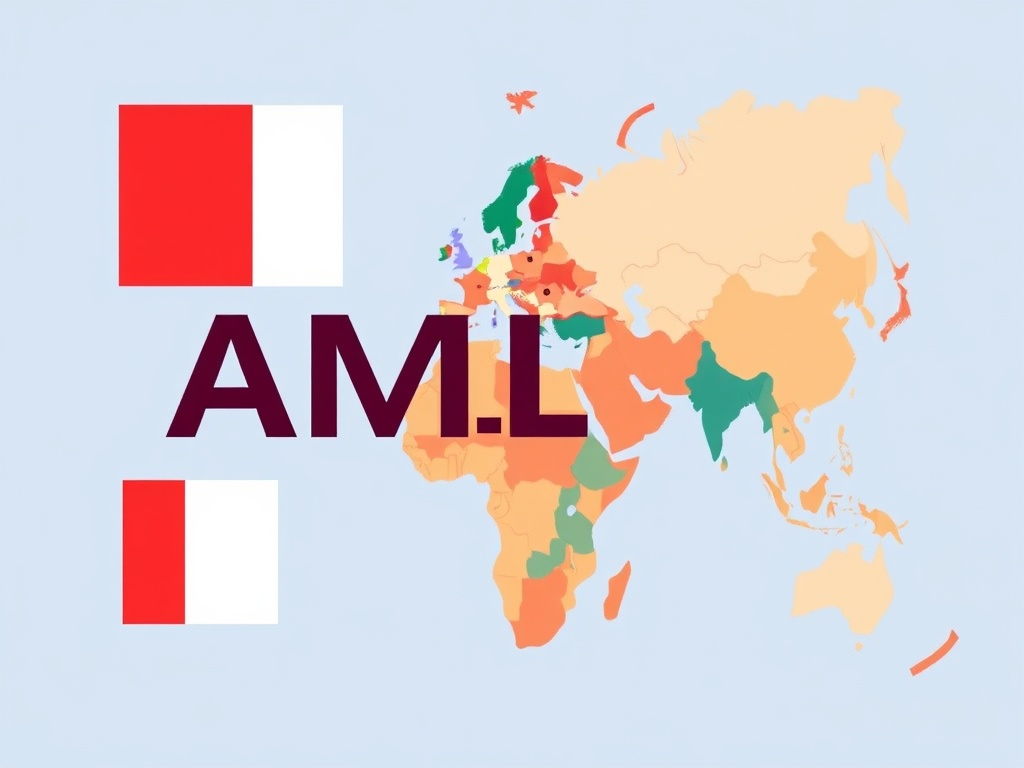
- FATF Grey and Black Lists: The FATF identifies jurisdictions with strategic AML deficiencies.
- Political and economic stability: Unstable regions may have weaker enforcement of AML laws.
- Industry-specific risks: Certain sectors (e.g., real estate, gambling) are more vulnerable to money laundering.
Step 4: Implement Screening and Monitoring Tools
Automated AML screening tools can streamline the country-by-country AML check process. These tools typically include:
- Sanctions screening: Checks against OFAC, EU, UN, and other sanctions lists.
- PEP (Politically Exposed Persons) screening: Identifies individuals with influence who may pose higher risks.
- Transaction monitoring: Flags unusual patterns that may indicate money laundering.
- Adverse media screening: Detects negative news related to customers or transactions.
Popular AML screening solutions include Refinitiv World-Check, Dow Jones Risk & Compliance, and LexisNexis Risk Solutions.
Step 5: Train Employees and Maintain Documentation
A robust AML compliance program requires ongoing training for employees. Key training areas include:
- Recognizing red flags of money laundering.
- Understanding reporting obligations.
- Properly documenting AML procedures and investigations.
Additionally, businesses must maintain detailed records of their AML checks, including:
- Customer identification and verification documents.
- Transaction monitoring reports.
- Suspicious activity reports (SARs) filed with authorities.
AML Check Country by Country: Key Jurisdictions and Their Frameworks
United States: The Bank Secrecy Act and Beyond
The United States has one of the most stringent AML frameworks in the world, primarily governed by the Bank Secrecy Act (BSA) of 1970. Key components include:
- Currency Transaction Reports (CTRs): Required for cash transactions exceeding $10,000.
- Suspicious Activity Reports (SARs): Filed when suspicious transactions are detected.
- Customer Due Diligence (CDD) Rule: Mandates the identification and verification of beneficial owners.
- FinCEN’s Beneficial Ownership Information (BOI) Reporting: Requires companies to report their true owners to prevent shell companies from being used for money laundering.
A country-by-country AML check for the U.S. must also consider state-level regulations, such as New York’s Part 504 AML rules, which impose additional compliance burdens on financial institutions.
European Union: The 6th Anti-Money Laundering Directive (6AMLD)
The EU’s 6AMLD, which came into effect in 2021, strengthens AML obligations across member states. Key provisions include:
- Expanded scope of predicate offenses: Includes cybercrime and environmental crimes as money laundering offenses.
- Stricter penalties: Fines can reach up to 5% of a company’s annual turnover.
- Enhanced due diligence for high-risk third countries: Businesses must apply additional scrutiny to transactions involving countries on the FATF’s grey list.
- Virtual Asset Service Providers (VASPs): Brings cryptocurrency exchanges under AML regulations.
For businesses operating in the EU, a country-by-country AML check must account for variations in national implementations of 6AMLD, such as Germany’s GwG (Geldwäschegesetz) or France’s Sapin II Law.
United Kingdom: Post-Brexit AML Regulations
Post-Brexit, the UK has maintained many of the EU’s AML standards while introducing its own reforms. Key aspects include:
- The Money Laundering Regulations 2017: Aligns with the EU’s 5AMLD but includes additional requirements.
- The Economic Crime (Transparency and Enforcement) Act 2022: Targets foreign owners of UK property to prevent money laundering through real estate.
- Suspicious Activity Reports (SARs): The UK’s National Crime Agency (NCA) receives over 500,000 SARs annually.
A country-by-country AML check for the UK must also consider devolved nations like Scotland and Wales, which may have additional local enforcement agencies.
Singapore: Asia’s AML Leader
Singapore is renowned for its robust AML framework, which is overseen by the Monetary Authority of Singapore (MAS). Key elements include:
- Corruption, Drug Trafficking and Other Serious Crimes (Confiscation of Benefits) Act: Provides authorities with broad powers to seize illicit assets.
- Prevention of Money Laundering Act (PMLA): Requires financial institutions to implement AML controls.
- Risk-based approach: Businesses must assess and mitigate risks specific to their operations.
For companies operating in Singapore, a country-by-country AML check should also evaluate the Commercial Affairs Department (CAD), which investigates financial crimes.
United Arab Emirates (UAE): Strengthening AML in the Gulf
The UAE has significantly strengthened its AML laws in recent years to align with FATF standards. Key regulations include:
- Federal Decree-Law No. 20 of 2018: The primary AML law, which criminalizes money laundering and terrorist financing.
- National Risk Assessment (NRA): Identifies high-risk sectors and jurisdictions.
- Suspicious Transaction Reports (STRs): Mandatory reporting of suspicious activities to the Financial Intelligence Unit (FIU).
A country-by-country AML check for the UAE must also consider the Dubai Financial Services Authority (DFSA) and the Abu Dhabi Global Market (ADGM) regulations, which apply to free zones.
China: Evolving AML Landscape
China’s AML framework has evolved significantly, with the Anti-Money Laundering Law of the People’s Republic of China being the cornerstone. Key aspects include:
- Real-name registration for financial accounts: Enhances transparency in banking transactions.
- Strict penalties for non-compliance: Fines can reach up to 5 million RMB for financial institutions.
- Focus on cross-border transactions: China’s AML laws increasingly target illicit flows related to trade and cryptocurrency.
For businesses operating in China, a country-by-country AML check must account for regional variations, such as the Shanghai Free Trade Zone, which has its own compliance requirements.
Common Challenges in AML Check Country by Country
Jurisdictional Differences and Regulatory Fragmentation
One of the biggest challenges in conducting an AML check country by country is the lack of harmonization between jurisdictions. For example:
- Some countries require enhanced due diligence for all customers, while others only apply it to high-risk individuals.
- Sanctions lists vary widely, with some countries imposing additional restrictions beyond UN or FATF mandates.
- Reporting thresholds for suspicious transactions differ, making it difficult to standardize compliance processes.
To overcome this, businesses should adopt a risk-based approach, tailoring their AML checks to the specific requirements of each jurisdiction.
Technological and Operational Hurdles
Implementing an effective country-by-country AML check requires advanced technology and operational efficiency. Common challenges include:
- Data integration: Consolidating customer data from multiple jurisdictions can be complex.
- False positives in screening: Over-reliance on automated tools can lead to unnecessary investigations.
- Keeping up with regulatory changes: AML laws evolve rapidly, requiring continuous updates to compliance programs.
Investing in AI-driven AML solutions and partnering with local compliance experts can help mitigate these challenges.
Cultural and Ethical Considerations
AML compliance is not just a legal obligation—it’s also a matter of ethics and corporate responsibility. Some challenges include:
- Balancing privacy and transparency: Customers may resist extensive identity verification due to privacy concerns.
- Dealing with corruption: In some jurisdictions, local officials may demand bribes to facilitate business operations, creating ethical dilemmas.
- Cultural attitudes toward financial crimes: In certain regions, money laundering may be perceived as a victimless crime, making enforcement difficult.
Businesses must foster a culture of compliance and integrity, ensuring that employees understand the importance of AML measures.
Best Practices for Effective AML Check Country by Country
Develop a Risk-Based Compliance Program
A successful AML check country by country strategy begins with a risk-based compliance program. Key steps include:
- Conduct a risk assessment: Identify the specific risks associated with each jurisdiction, industry, and customer type.
- Implement proportionate measures: Apply enhanced due diligence only where necessary.
- Monitor and review: Regularly update risk assessments to reflect changes in regulations or business operations.
Leverage Technology for Automation
Manual AML checks are time-consuming and prone to errors. Businesses should invest in:
- AI and machine learning: These technologies can analyze vast amounts of data to detect suspicious patterns.
- Blockchain analytics: Useful for tracking cryptocurrency transactions and identifying illicit flows.
- Regulatory technology (RegTech): Solutions like ComplyAdvantage and Tookitaki automate compliance workflows.
Collaborate with Local Experts
Navigating AML regulations in a foreign country can be daunting. Partnering with local compliance consultants or law firms can provide:
- Insights into regional enforcement trends.
- Assistance with language barriers and cultural nuances.
- Access to up-to-date regulatory updates.
Foster a Culture of Compliance
AML compliance should be ingrained in a company’s culture. Strategies to achieve this include:
- Regular training: Educate employees on AML risks and reporting obligations.
- Whistleblower protections: Encourage employees to report suspicious activities without fear of retaliation.
- Leadership commitment: Senior management must prioritize AML compliance and set the tone from the top.
Stay Updated on Emerging Trends
The AML landscape is constantly evolving. Businesses should stay informed about:
- New FATF recommendations: The FATF periodically updates its standards, such as the recent focus on virtual assets.
- Cryptocurrency regulations: As digital currencies gain traction, AML rules for crypto are becoming stricter.
- Environmental crimes: The EU’s 6AMLD now includes eco-crimes as predicate offenses for money laundering.
Subscribing to industry publications, attending webinars, and participating in AML forums can help businesses stay ahead of the curve.
Future of AML Check Country by Country: Trends and Predictions

AML Check Country by Country: A Strategic Framework for Digital Asset Compliance
As a digital assets strategist with a background in traditional finance and quantitative analysis, I’ve observed that the fragmented landscape of AML regulations across jurisdictions presents both challenges and opportunities for market participants. The phrase AML check country by country isn’t just a compliance checkbox—it’s a critical lens through which institutions must evaluate risk, operational efficiency, and strategic positioning. From my perspective, the key lies in recognizing that AML frameworks are not monolithic; they vary significantly in stringency, technological adoption, and enforcement priorities. For instance, jurisdictions like Singapore and Switzerland have embraced risk-based approaches with advanced digital identity solutions, while others lag behind with outdated systems. This disparity creates arbitrage opportunities for compliant players but also exposes them to regulatory whiplash when operating across borders. My work in portfolio optimization has taught me that the most resilient strategies are those that preemptively adapt to these variations rather than react to them.
Practically speaking, institutions must move beyond static compliance checklists and adopt a dynamic, data-driven approach to AML check country by country. This means leveraging on-chain analytics to map transaction flows across jurisdictions, identifying high-risk corridors, and aligning with local regulators’ expectations—not just global standards. For example, the EU’s MiCA regulation demands rigorous traceability for crypto transactions, while the U.S. FinCEN focuses on beneficial ownership disclosures. A one-size-fits-all solution is a recipe for inefficiency or worse, non-compliance. My experience in market microstructure has shown that the most successful firms integrate AML checks into their core infrastructure, using APIs to automate country-specific screening and real-time risk scoring. The goal isn’t just to pass audits but to turn compliance into a competitive advantage—streamlining onboarding, reducing false positives, and fostering trust with counterparties. In an industry where reputation is currency, proactive AML strategies aren’t optional; they’re the foundation of sustainable growth.